
News Summary
Shrimpers in South Carolina are advocating for tariffs on imported shrimp, which they believe threaten their livelihoods and the local shrimp industry. With 94% of shrimp consumed in the U.S. being imported, many fishermen are struggling against foreign competition. The Southern Shrimping Alliance supports tariffs to protect local producers from unfair imports. Concerns also rise regarding the quality and safety of imported seafood, including labor practices in exporting countries. Facing these challenges, local lawmakers are pushing for protective measures to ensure a brighter future for the shrimping community.
South Carolina Shrimpers Push for Tariffs Amid Struggles with Imports
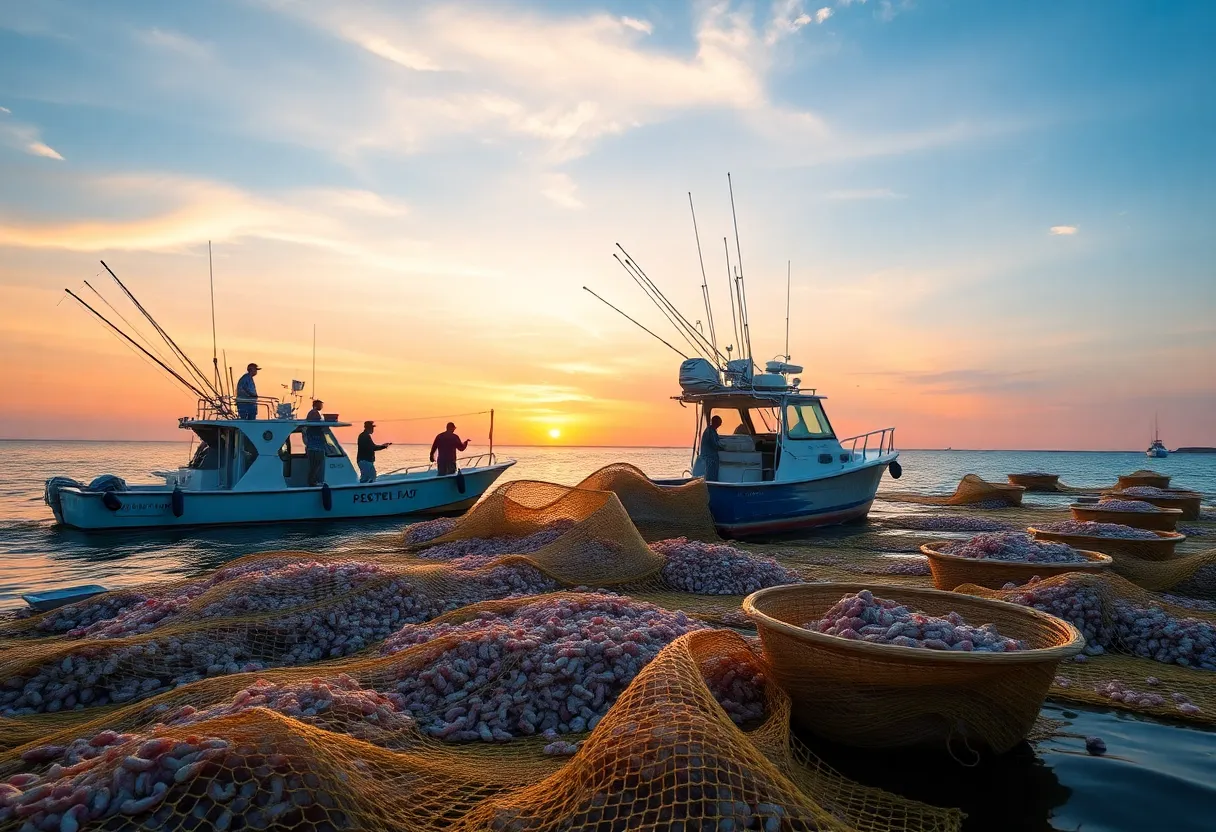
In the sunny state of South Carolina, shrimpers are rallying together to call for tariffs that they believe could breathe much-needed life back into the U.S. shrimp industry. The owner of CJ Seafood, a local staple, has been vocal about the challenges faced by American shrimpers. For decades, imported shrimp has threatened the livelihoods of hardworking fishermen who feel like they’re *fighting an uphill battle* against foreign competition.
The Shrimp Industry’s Rocky Road
Many local shrimpers, including those from generational fishing backgrounds, describe the situation as dire. With *94% of shrimp consumed in the U.S. being imported*, the domestic industry has been “killed by imports,” leaving them grappling with a battered fishery. Much of the shrimping operations have shifted to far-off places like Southeast Asia, Ecuador, and India, leaving local fishermen feeling *crushed* under the weight of foreign imports. It’s easy to see why there’s a strong push to reevaluate the ways we protect our local seafood industry.
Being *Burdened by Imports*
With shrimp farms overseas often causing *harmful environmental practices*, concerns are rising about the quality and safety of imported seafood. Reports have circulated suggesting some imported shrimp might be produced in ways that threaten the ecosystems where they’re raised. Additionally, the use of banned hormones and antibiotics in shrimp farming processes overseas has left local shrimpers worried about the *health implications* tied to cheap imports.
Local fishermen want consumers to know that “*good seafood ain’t cheap, and cheap seafood ain’t good*.” They pride themselves on the *quality of U.S. shrimp*, which they believe far surpasses that of many imported options.
A Glimmer of Hope
Despite the numerous challenges, there is optimism among the shrimping community. The spring harvest season is right around the corner, and shrimpers are gearing up to pull in an average of around 593,000 pounds of whole, head-on white roe shrimp valued at nearly $1.9 million. These figures reflect the potential for a vital recovery, but concerns still loom over *whether local demand can be met* considering the lost infrastructure.
Action and Advocacy
In response to these pressing issues, the Southern Shrimping Alliance is lending its support to the idea of tariffs. They believe that such measures could help protect against foreign competitors who are dumping shrimp into the local market, further complicating the already difficult scenario for American producers. Recently, a temporary pause on steep tariffs was announced, with negotiations set for a lower 10% tariff during discussions regarding trade policies.
Addressing Labor and Safety Concerns
Beyond the economic concerns, there are alarming reports regarding *forced labor* and *antibiotic use* in shrimp supply chains, particularly from countries like India and Vietnam. The U.S. Department of Labor has flagged India for these issues, raising significant questions about the ethics of imported seafood. India alone is responsible for providing 42% of all shrimp imports to the U.S., making these concerns all the more pertinent.
Political Support for Local Industry
Local lawmakers are also stepping in to advocate for the shrimp industry. U.S. Representative Clay Higgins recently penned a letter urging for the implementation of tariffs on shrimp imports from major exporting countries. His appeal highlights that foreign seafood industries often benefit from heavy subsidies and *illegal dumping*, practices that ultimately undermine American livelihoods. As discussions around tariffs and trade policies continue, South Carolina shrimpers remain hopeful for a *better tomorrow* for their beloved industry.
Deeper Dive: News & Info About This Topic
- Fox Business: South Carolina Shrimpers Advocate for Tariffs
- Island Packet: Local Shrimpers and Tariffs
- Fox News: Shrimp Industry Video Coverage
- Newser: U.S. Shrimp Industry’s Reaction to Tariffs
- Seafood Source: Southern Shrimp Alliance and Tariffs
- Wikipedia: Shrimp Farming
- Encyclopedia Britannica: Shrimps
- Google Search: Shrimp Tariffs in the US
- Google News: Shrimp Industry in the US


Author: STAFF HERE MYRTLE BEACH
The HERE Myrtle Beach Staff Writers are a collaborative team of journalists, editors, and local contributors passionate about delivering accurate, timely information to the Myrtle Beach community. As part of the HEREcity.com Network, which powers over 100 U.S. city sites including HEREcolumbia.com, our staff draws on collective experience in South Carolina journalism to cover everything from business sales and real estate developments to dining deals and community initiatives. Our Expertise and Background Local Roots in Myrtle Beach Our team includes lifelong Myrtle Beach residents and SC natives with deep knowledge of the area’s history, economy, and culture. We’ve covered key events like the recent developments along the Grand Strand, Myrtle Beach’s tourism and hospitality industry, and growth in local education sectors (e.g., Coastal Carolina University programs). Collective Experience With over 50 combined years in journalism, our staff has backgrounds in print, digital media, and community reporting. We prioritize fact-based stories, drawing from sources like the Myrtle Beach Area Chamber of Commerce, city government records, and on-the-ground interviews. Commitment to Quality Every article is a group effort, involving research, editing, and verification to ensure reliability. We adhere to journalistic standards, citing credible sources and updating content as new details emerge.