

News Summary
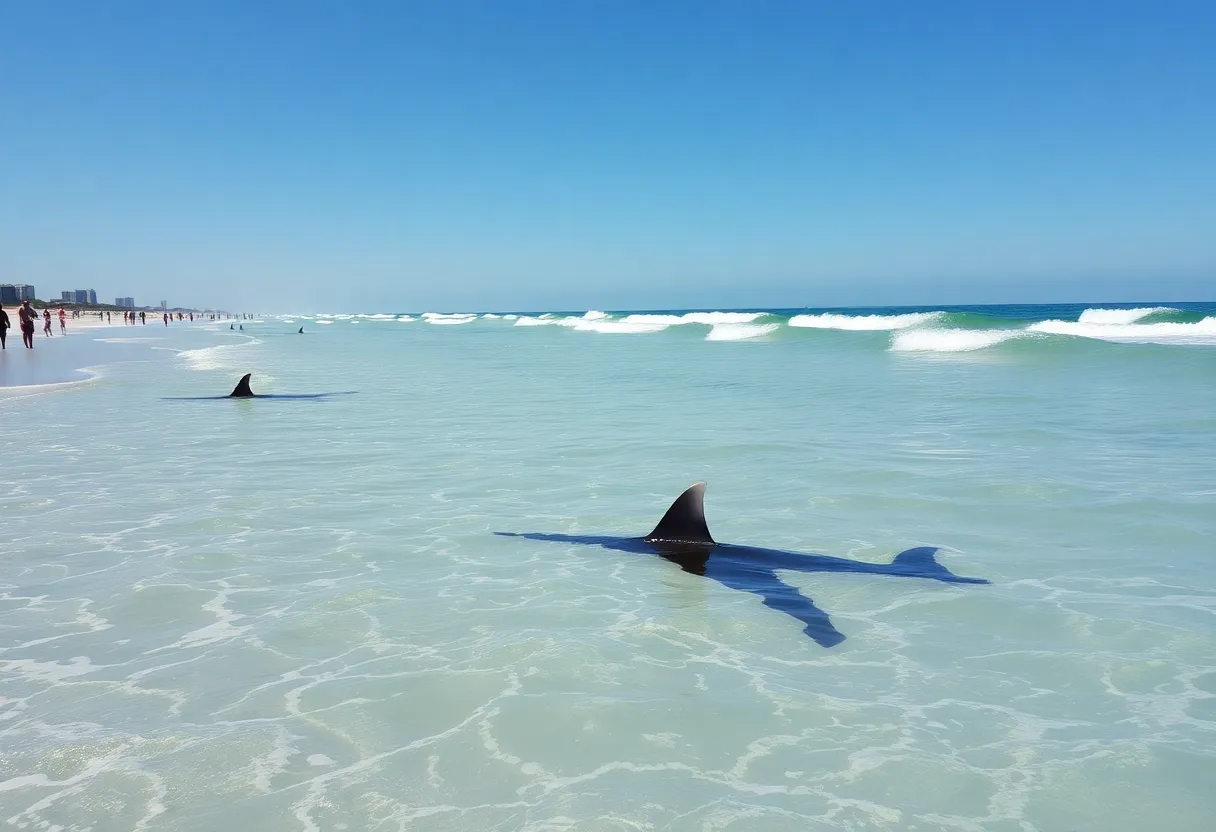
Myrtle Beach is raising awareness about shark behavior as recent sightings of blacktip and spinner sharks occur along the coast. While shark attacks remain rare, local officials stress the importance of marine safety as beachgoers increase. Public education is vital, especially given the seasonal migration of sharks and the influx of over 17 million tourists annually. Officials recommend swimming precautions and highlight the necessity for responsible interactions with marine life.
Myrtle Beach – Recent shark sightings along the coast of Myrtle Beach are prompting officials to raise public awareness about marine safety and shark behavior. Reports indicate an uptick in shark encounters, particularly with blacktip and spinner sharks, which are commonly found near the shore in South Carolina. As beachgoers flock to the area—attracting over 17 million tourists annually—the potential for unintentional interactions with sharks increases, making awareness and safety paramount.
While unprovoked shark attacks are infrequent in the Myrtle Beach area, the presence of various shark species reflects seasonal migratory trends, particularly during late spring to early fall when human beach activity peaks. The region is home to 19 species of sharks, drawn to the coastal waters due to healthy fish populations. Although the likelihood of a shark attack remains low, with only two shark bites reported in South Carolina in 2023, officials emphasize the importance of exercising caution while enjoying water activities.
Several recent incidents highlight the need for public education on interacting with marine life. In one notable case, the Myrtle Beach Fire Department responded to an incident involving a person who was bitten by a shark in the ocean. Such events underscore the critical importance of contacting wildlife authorities before intervening with stranded or injured sharks, as professional expertise is necessary for the animals’ safety and that of beachgoers.
Among the notable sightings, a young great white shark was recently observed off Pawleys Island, a reminder that while these larger species are rare in the region, they occasionally venture close to shore. More commonly encountered species, such as blacktip and sandbar sharks, frequent the waters near fishing piers, drawn by discarded bait and fish, creating potential risks for those engaged in fishing activities.
Throughout South Carolina, shark activity is monitored by lifeguards and wildlife authorities who focus on ensuring the safety of beachgoers. Despite the fears that sharks may instill, the odds of a shark attack in the United States are approximately 1 in 11.5 million, making such occurrences extremely rare. Nevertheless, with the growing number of visitors to Myrtle Beach, there is a critical need for effective public safety guidelines and awareness surrounding sharks.
State officials offer practical tips to help beachgoers stay safe, including avoiding swimming at dawn and dusk and remaining observant of the behavior of nearby marine life. Understanding that sharks typically become more active during times of high human activity can aid in minimizing encounters. The combination of seasonal shark migration and increased beach attendance underlines the necessity of approaching interaction with marine creatures—be they sharks or other wildlife—with knowledge and cautiousness.
The current discussions surrounding shark behavior in Myrtle Beach are not simply about specific incidents but are anchored in a larger conversation about marine conservation and public engagement. As sharks and other marine animals converge off the coast, establishing a balance between enriching beach experiences and honoring the natural marine ecosystem is crucial. By educating the public on shark behavior and safety protocols, officials aim to ensure a safe and enjoyable environment for all who visit Myrtle Beach.
Deeper Dive: News & Info About This Topic
HERE Resources
Horry County Police Request Federal Review on Shooting Case
The Family-Friendly Fun of Myrtle Beach
New Safety Committee Proposed for Horry County Schools
St. James Boys Basketball Team Dominates Rivals
New Multi-Entertainment Restaurant Alley Oops Opening in North Myrtle Beach
Surfside Beach Considers New Aerial Arts Regulations
The 2024 México Open: A Golfing Extravaganza
Discovering Shark Teeth: The Myrtle Beach Community
Hilton Head Island Welcomes Great White Sharks
Myrtle Beach Hit-and-Run Tragedy: Suspect Arrested
Additional Resources
- Myrtle Beach Online: Recent Shark Sightings
- Wikipedia: Shark
- Post and Courier: Great White Shark Sighting
- Google Search: Shark Safety Tips
- World Atlas: Most Shark Infested Beaches in SC
- Encyclopedia Britannica: Shark
- Myrtle Beach Online: Shark Activity Update
- Google News: Shark Attacks in South Carolina


Author: STAFF HERE MYRTLE BEACH
The HERE Myrtle Beach Staff Writers are a collaborative team of journalists, editors, and local contributors passionate about delivering accurate, timely information to the Myrtle Beach community. As part of the HEREcity.com Network, which powers over 100 U.S. city sites including HEREcolumbia.com, our staff draws on collective experience in South Carolina journalism to cover everything from business sales and real estate developments to dining deals and community initiatives. Our Expertise and Background Local Roots in Myrtle Beach Our team includes lifelong Myrtle Beach residents and SC natives with deep knowledge of the area’s history, economy, and culture. We’ve covered key events like the recent developments along the Grand Strand, Myrtle Beach’s tourism and hospitality industry, and growth in local education sectors (e.g., Coastal Carolina University programs). Collective Experience With over 50 combined years in journalism, our staff has backgrounds in print, digital media, and community reporting. We prioritize fact-based stories, drawing from sources like the Myrtle Beach Area Chamber of Commerce, city government records, and on-the-ground interviews. Commitment to Quality Every article is a group effort, involving research, editing, and verification to ensure reliability. We adhere to journalistic standards, citing credible sources and updating content as new details emerge.