
News Summary
North and South Carolina face a devastating wildfire crisis forcing thousands to evacuate. Dry conditions and high winds led to numerous blazes, with significant fires reported across both states. South Carolina declared a state of emergency amid over 175 wildfires burning thousands of acres. Meanwhile, North Carolina struggles with wildfires in the Blue Ridge Mountains threatening communities. Firefighting resources are strained as air quality alerts emerge, and officials urge caution amid ongoing risks. The situation also highlights a broader wildfire crisis affecting regions beyond the Carolinas.
Thousands Evacuated as Wildfires Rage in North and South Carolina Amid Dry Conditions and High Winds
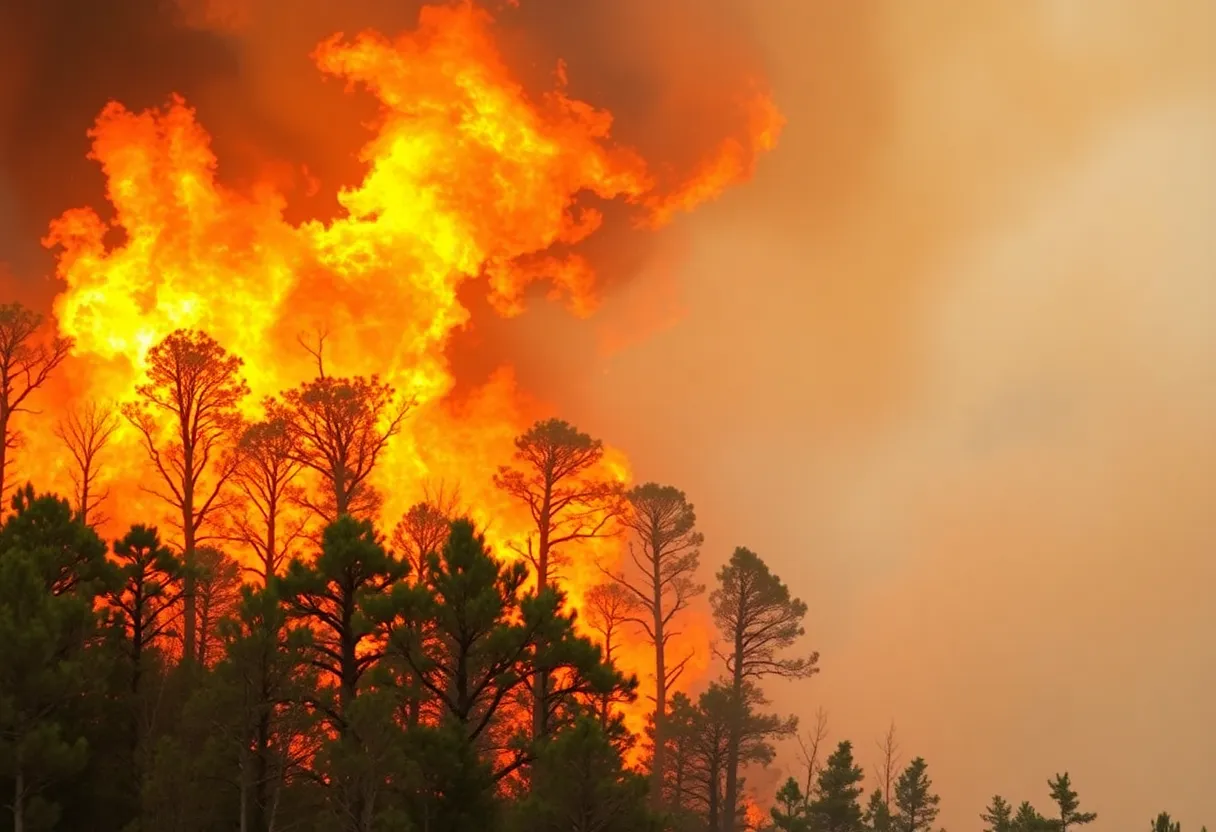
North Carolina and South Carolina are facing a wildfire crisis that has led to the evacuation of thousands of residents from their homes. Dry conditions and gusty winds are exacerbating the situation, with numerous wildfires spreading across both states.
In South Carolina, officials report that 175 wildfires have burned over 4,200 acres of land. The most significant fire, originating in Carolina Forest, situated west of Myrtle Beach, has forced evacuations in multiple neighborhoods. South Carolina Governor Henry McMaster has declared a state of emergency to access additional funds and firefighting resources. Additionally, a statewide ban on outdoor fires has been implemented to limit further risks.
In North Carolina, a major wildfire in the Blue Ridge mountains is threatening communities such as Saluda and Tryon. The Melrose Fire has already consumed approximately 400 acres and remains uncontained. Voluntary evacuations are currently in place for the areas under threat. The North Carolina Forest Service is deploying 249 firefighting personnel to combat the state’s three most significant wildfires.
Firefighting Efforts and Strain on Resources
The volume of active fires has placed a considerable strain on firefighting resources in both states. Four homes have already been destroyed in Polk County, North Carolina, which has led to a code red air quality alert being issued for the area. Significant efforts have been made, including using aircraft for water-dropping missions to aid firefighting crews.
In South Carolina, two notable wildfires, the Table Rock Fire and the Persimmon Ridge Fire, have consumed over 1,300 acres and 800 acres respectively. Both fires have been attributed to human causes, prompting officials to call for voluntary evacuations in residences east of Table Rock State Park.
Weather Conditions and Their Impact
Recent weather patterns have worsened the wildfire conditions. Heavy storms recently delivered 1 to 4 inches of rain across the Carolinas, triggering flash flood warnings before the region experienced dry and windy weather conditions again. Severe storms led to downed trees and rescue operations near Nebo, North Carolina, underscoring safety concerns for residents. As flash flood risks shifted across parts of the Southeast—including Alabama and northern Florida—fire officials remain cautious about the potential for adverse fire behavior, especially in anticipation of critical weather conditions.
Broader Context of Wildfires
The wildfire crisis is not limited to the Carolinas. More than 700 wildfires are reported in Canada, significantly impacting air quality across the Midwest and prompting alerts regarding unhealthy breathing conditions. Cities such as Chicago and Minneapolis are feeling the effects of smoke pollution, while other regions, including the West and parts of Hawaii, are under severe fire weather concerns due to similar dry and windy incidents.
Experts have attributed the current fuel conditions in North Carolina to the debris left by Hurricane Helene, indicating that the situation may be unprecedented. A forecasted cold front may bring temporary relief to firefighters starting Monday, but no substantial rainfall is expected thereafter, necessitating ongoing vigilance and support for affected communities.
Deeper Dive: News & Info About This Topic
HERE Resources
South Carolina Faces Severe Wildfire Crisis
South Carolina Wildfires Intensify: Over 18,000 Acres Affected
South Carolina Wildfire Crisis Intensifies
South Carolina Declares State of Emergency as Wildfires Rage
South Carolina Declares State of Emergency Amid Wildfires
South Carolina Declares State of Emergency Due to Wildfires
South Carolina Faces Wildfire Crisis as State of Emergency Declared
South Carolina Declares State of Emergency Due to Wildfires
Myrtle Beach Faces Aftermath of Tropical Storm Chantal
Tropical Storm Chantal Impacts Myrtle Beach Area
Additional Resources
- ABC News: Flood Threats and Wildfire Smoke
- CNN: Wildfires in Carolinas and Evacuations
- The Guardian: Carolina Wildfires Forecast
- National League of Cities: Community Resources
- AP News: Wildfires in South and North Carolina
- Wikipedia: Wildfires in the United States


Author: STAFF HERE MYRTLE BEACH
The HERE Myrtle Beach Staff Writers are a collaborative team of journalists, editors, and local contributors passionate about delivering accurate, timely information to the Myrtle Beach community. As part of the HEREcity.com Network, which powers over 100 U.S. city sites including HEREcolumbia.com, our staff draws on collective experience in South Carolina journalism to cover everything from business sales and real estate developments to dining deals and community initiatives. Our Expertise and Background Local Roots in Myrtle Beach Our team includes lifelong Myrtle Beach residents and SC natives with deep knowledge of the area’s history, economy, and culture. We’ve covered key events like the recent developments along the Grand Strand, Myrtle Beach’s tourism and hospitality industry, and growth in local education sectors (e.g., Coastal Carolina University programs). Collective Experience With over 50 combined years in journalism, our staff has backgrounds in print, digital media, and community reporting. We prioritize fact-based stories, drawing from sources like the Myrtle Beach Area Chamber of Commerce, city government records, and on-the-ground interviews. Commitment to Quality Every article is a group effort, involving research, editing, and verification to ensure reliability. We adhere to journalistic standards, citing credible sources and updating content as new details emerge.