
News Summary
A federal judge has ordered a review of the legal authority surrounding Florida’s controversial immigration facility known as ‘Alligator Alcatraz.’ Constructed to detain up to 3,000 migrants, this facility has raised significant concerns regarding detainees’ rights and environmental impacts. Allegations include poor living conditions and lack of legal counsel as advocacy groups call for transparency. The court ruling compels officials to disclose specific legal agreements, stirring a legal battle that highlights both civil rights and environmental concerns in the Everglades.
Federal Judge Demands Clarity on Florida’s Controversial Immigration Facility
In an exciting turn of events, a U.S. District Judge has stepped in to address the murky waters surrounding Florida’s immigration detention facility, endearingly nicknamed “Alligator Alcatraz.” The ruling compels both federal and state officials to lay all their cards on the table by producing specific legal agreements detailing the authority to detain individuals at this isolated site nestled in the Everglades.
A Peek into Alligator Alcatraz
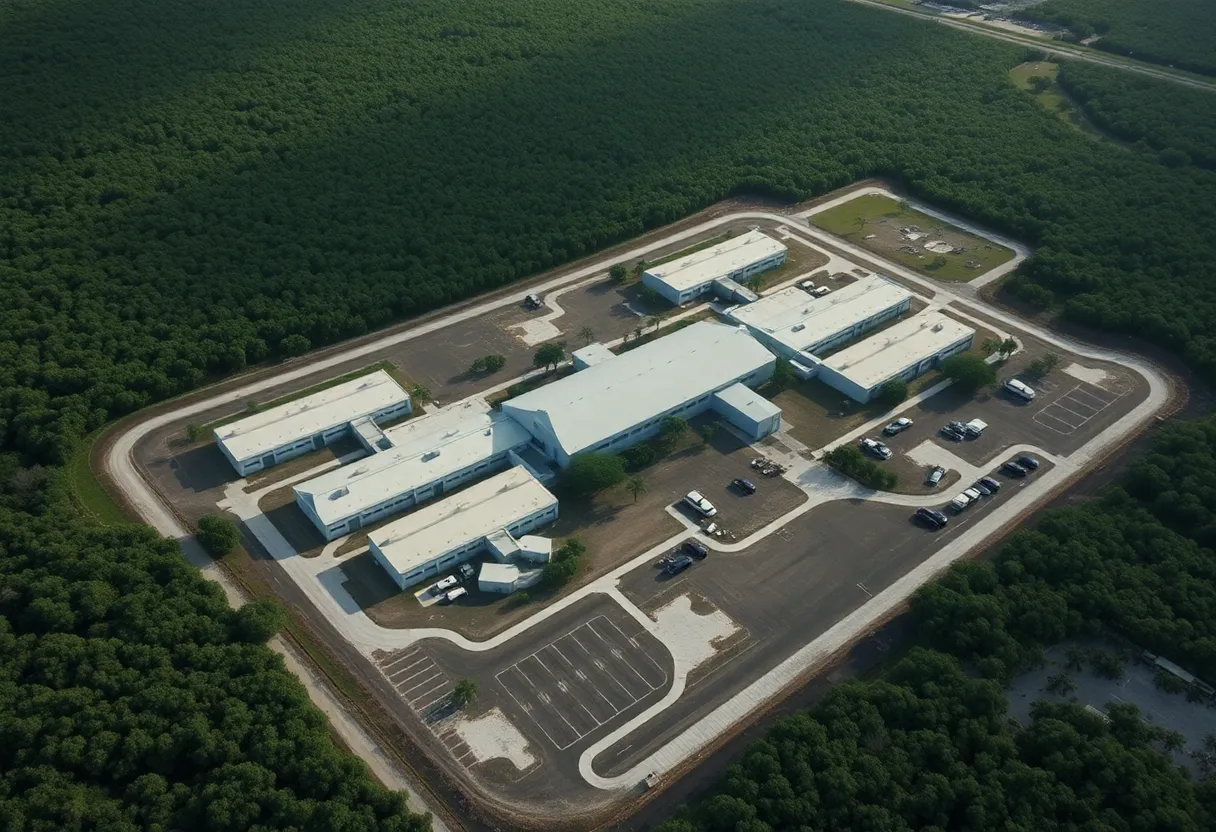
Constructed in early July 2025 on a quiet airstrip in the heart of the Everglades, Alligator Alcatraz has become the center of a heated civil rights lawsuit. The facility is designed to hold a massive 3,000 migrants and is built from repurposed FEMA trailers along with temporary soft-sided structures. Its very location doesn’t just add to its uniqueness; Florida Governor Ron DeSantis himself has touted the facility’s security, hinting, humorously, that any potential escapees would have to face local alligators!
However, despite its seemingly rugged charm, the facility has attracted its fair share of controversy. Detainees have voiced concerns over terrible living conditions, often described as being confined in cages during the sweltering heat of Florida, making it difficult for them to even find a proper shower or eat decent meals.
The Legal Battle Unfolds
The recent court order stems from a lawsuit claiming that detainees’ constitutional rights are being trampled upon. Allegations include a lack of access to legal counsel, prolonged detention without charges, and canceled bond hearings. All of these factors contribute to a growing feeling among detainees that their rights are being ignored. What’s interesting is that since the center’s opening, there has been uncertainty over who holds authority over the facility.
While state and federal officials have attempted to limit the information shared to documents linked to U.S. Immigration and Customs Enforcement (ICE) and three state agencies, including the Florida Highway Patrol and the Florida National Guard, the detainees’ legal teams have pushed for a broader set of documents that could reveal even more about the operations there. However, the judge deemed such requests too extensive, leaving many with unanswered questions.
Environmental Concerns and Community Impacts
Interestingly, this isn’t the first lawsuit targeting Alligator Alcatraz. Environmental advocacy groups are also raising alarms, questioning whether the construction of this facility followed the necessary environmental laws and what it might mean for the delicate ecosystems of the Everglades. Local Indigenous communities have added their voices to the fray, expressing strong opposition, as they feel the establishment of the facility threatens sacred lands and their ancestral heritage.
Meanwhile, the operational costs for running this makeshift facility are projected to hit an astounding $450 million for just one year. As federal immigration enforcement ramps up under the current administration, the facility has already started deportation flights, aiming to alleviate the pressure on state law enforcement and local jails, where over 58,000 immigrants were recorded in ICE custody by late June.
A Spiritual Dimension
As the drama unfolds, and officials rush to meet the judge’s deadline, many are left wondering about the future of Alligator Alcatraz. With legal, environmental, and social implications all in play, it’s clear that this story is far from over.
Frequently Asked Questions (FAQ)
What is Alligator Alcatraz?
It is an immigration detention facility located in Florida’s Everglades, designed to hold up to 3,000 migrants.
Why is the facility called Alligator Alcatraz?
The nickname reflects its remote location and strict security measures, humorously highlighted by local officials mentioning alligators.
What are the main concerns raised by detainees?
Detainees have reported poor living conditions, lack of access to legal counsel, and prolonged detention without charges.
What is the current legal status of the facility?
A civil rights lawsuit has been filed against state and federal governments, leading to a federal judge ordering the disclosure of legal agreements regarding the detention authority.
Are there any environmental concerns linked to the facility?
Yes, several environmental groups have filed lawsuits over potential violations of environmental laws and the impact on local ecosystems.
Key Features of Alligator Alcatraz
| Feature | Description |
|---|---|
| Location | Florida’s Everglades on an isolated airstrip |
| Capacity | Currently able to accommodate 3,000 detainees; planned expansion to 4,000 |
| Construction Cost | Approximately $450 million per year to operate |
| Legal Issues | Facing lawsuits regarding civil rights and environmental concerns |
| Security Features | Built to be secure; humorous mention of alligators deterring escape |
Deeper Dive: News & Info About This Topic
- The New York Times: Alligator Alcatraz and Deportation Flights
- Wikipedia: Immigration Detention in the United States
- CNN: What is Alligator Alcatraz?
- Miami Herald: News on Alligator Alcatraz
- BBC News: Alligator Alcatraz Coverage


Author: STAFF HERE MYRTLE BEACH
The HERE Myrtle Beach Staff Writers are a collaborative team of journalists, editors, and local contributors passionate about delivering accurate, timely information to the Myrtle Beach community. As part of the HEREcity.com Network, which powers over 100 U.S. city sites including HEREcolumbia.com, our staff draws on collective experience in South Carolina journalism to cover everything from business sales and real estate developments to dining deals and community initiatives. Our Expertise and Background Local Roots in Myrtle Beach Our team includes lifelong Myrtle Beach residents and SC natives with deep knowledge of the area’s history, economy, and culture. We’ve covered key events like the recent developments along the Grand Strand, Myrtle Beach’s tourism and hospitality industry, and growth in local education sectors (e.g., Coastal Carolina University programs). Collective Experience With over 50 combined years in journalism, our staff has backgrounds in print, digital media, and community reporting. We prioritize fact-based stories, drawing from sources like the Myrtle Beach Area Chamber of Commerce, city government records, and on-the-ground interviews. Commitment to Quality Every article is a group effort, involving research, editing, and verification to ensure reliability. We adhere to journalistic standards, citing credible sources and updating content as new details emerge.