
Myrtle Beach, August 18, 2025
News Summary
Hurricane Erin, now a Category 3 storm, poses serious risks for swimmers in Myrtle Beach, with forecasters predicting hazardous ocean conditions. Strong swells and dangerous rip currents are likely, leading to increased safety concerns as the beach area braces for potential hazards. Officials have warned that swimming may be dangerous or prohibited, as the area has already witnessed tragic incidents this summer. Public safety measures include displaying red flags at beaches, and swimmers are advised to monitor conditions closely and stay near lifeguards.
Myrtle Beach Faces Life-Threatening Beach Conditions Due to Hurricane Erin
Hurricane Erin has been downgraded to a Category 3 hurricane by the National Hurricane Center, but it is still expected to create life-threatening conditions for swimmers along the Myrtle Beach area. As the storm approaches, residents and visitors are being warned of hazardous ocean conditions that include strong swells and dangerous rip currents.
Forecasters predict that the Myrtle Beach area, which has already seen at least three ocean drownings this summer, is at heightened risk as a 21-year-old swimmer remains missing. The presence of rip currents, known to be the third-highest cause of fatalities related to tropical cyclones in the U.S., raises serious safety concerns.
Though Hurricane Erin will pass hundreds of miles offshore, it is forecasted to generate significant swell and larger waves, with sea conditions starting to be impacted at the beginning of the week. The wave height is anticipated to peak at between 6 to 7 feet on Wednesday when the hurricane is closest to the Grand Strand.
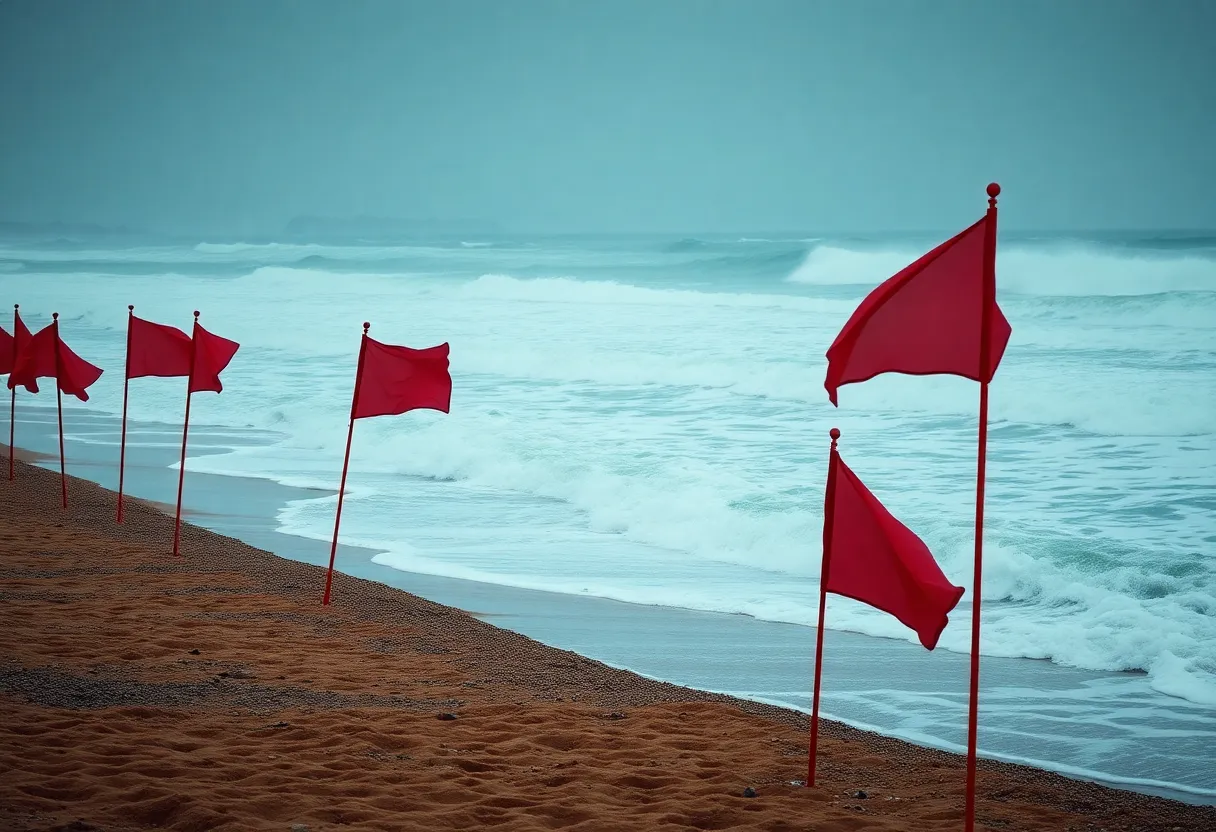
As a safety precaution, the beaches in the area will display red flags and possibly double red flags, indicating that swimming is dangerous and may be prohibited. Rip currents are particularly hazardous as they do not pull victims underwater but drag swimmers far from the shore, causing panic and exhaustion. On average, these currents can move at one to two feet per second, but their speeds can reach up to eight feet per second.
Swimmers are advised not to swim against a rip current. The recommended safety approach is to swim parallel to the shore and signal for help if caught in such a current. It is also advisable to remain close to lifeguards and avoid swimming if uncertain of the ocean conditions.
A single red flag indicates hazardous swimming conditions, while double red flags mean that the beach is closed to swimming altogether. As Hurricane Erin nears, a temporary state of emergency has been declared in Dare County, North Carolina, with beach hazards expected to impact the Northern Outer Banks and Crystal Coast beaches beginning Tuesday.
Officials stress the importance of remaining vigilant, as longshore currents may develop during and after the storm’s passage. Meteorologists recommend closely monitoring the conditions as the swells may peak and lead to dangerous surf conditions in the coming days.
Background on Rip Currents
Rip currents are powerful channels of water that flow away from the shore and are capable of quickly carrying swimmers into deeper water. They are most common during and after storm conditions and can vary greatly in speed and force. From 2010 until June 16, 2025, there were 17 confirmed drownings in Horry County attributed to rip currents. With the increased wave activity predicted from Hurricane Erin, caution is strongly advised for anyone planning to swim in ocean waters during this time.
Safety Recommendations
- Do not swim against rip currents; swim parallel to the shore.
- Signal for help if you find yourself caught in a rip current.
- Stay close to lifeguards while swimming.
- Monitor the flags; red flags indicate swimming hazards.
- Avoid swimming if the conditions appear unsafe.
FAQ
1. What is Hurricane Erin’s current status?
Hurricane Erin has been downgraded to a Category 3 hurricane but still poses serious risks for swimmers in Myrtle Beach.
2. What are the expected conditions at Myrtle Beach due to Hurricane Erin?
Conditions include strong swells, larger waves, and dangerous rip currents, with wave heights expected to peak at 6 to 7 feet on Wednesday.
3. How can swimmers stay safe during these conditions?
Swimmers should avoid swimming against rip currents, stay close to lifeguards, and monitor flag warnings at beaches.
4. What do the red flags indicate?
A single red flag indicates hazardous swimming conditions. Two red flags mean that the beach is closed to swimming.
5. Where can beach hazards be expected as Hurricane Erin approaches?
Beach hazards are expected to affect the Northern Outer Banks and Crystal Coast beaches starting Tuesday.
Deeper Dive: News & Info About This Topic
HERE Resources
American Tourist Injured in Shark Attack While Spearfishing
Clemson University Unveils Deep Orange 16 Rescue Vehicle
Teen Denied Bond After Violent Police Chase in Myrtle Beach
California Man Rescued After Trapped Behind Waterfall
Santee Cooper Settles to Protect Endangered Sturgeon in Georgetown
Hurricane Erin Begins Impacting Atlantic Region
South Carolina Initiates Major I-95 Expansion Project
Tropical Storm Erin Strengthens Ahead of Hurricane Status
Filming for Netflix’s ‘Outer Banks’ Canceled at Socastee
Floor & Decor Opens New Store in Myrtle Beach Area
Additional Resources
- WBTW: The Latest on Hurricane Erin
- Wikipedia: Hurricane Erin
- Myrtle Beach Online: Hurricane Erin Update
- Google Search: Hurricane Erin Weather News
- WXII 12: Hurricane Erin and Beach Conditions


Author: STAFF HERE MYRTLE BEACH
The HERE Myrtle Beach Staff Writers are a collaborative team of journalists, editors, and local contributors passionate about delivering accurate, timely information to the Myrtle Beach community. As part of the HEREcity.com Network, which powers over 100 U.S. city sites including HEREcolumbia.com, our staff draws on collective experience in South Carolina journalism to cover everything from business sales and real estate developments to dining deals and community initiatives. Our Expertise and Background Local Roots in Myrtle Beach Our team includes lifelong Myrtle Beach residents and SC natives with deep knowledge of the area’s history, economy, and culture. We’ve covered key events like the recent developments along the Grand Strand, Myrtle Beach’s tourism and hospitality industry, and growth in local education sectors (e.g., Coastal Carolina University programs). Collective Experience With over 50 combined years in journalism, our staff has backgrounds in print, digital media, and community reporting. We prioritize fact-based stories, drawing from sources like the Myrtle Beach Area Chamber of Commerce, city government records, and on-the-ground interviews. Commitment to Quality Every article is a group effort, involving research, editing, and verification to ensure reliability. We adhere to journalistic standards, citing credible sources and updating content as new details emerge.