
Myrtle Beach, January 18, 2026
Mark Kruea has officially taken office as Myrtle Beach’s new mayor after an eight-year tenure by the previous mayor. His initial priorities include enhancing public safety, managing city budgeting, and improving community relations. A key early action was the decision to end the seasonal traffic rerouting plan that negatively impacted local businesses. Mayor Kruea aims to foster a collaborative environment while addressing fiscal responsibility and optimizing the Tourism Development Fee for better resource allocation.
Myrtle Beach
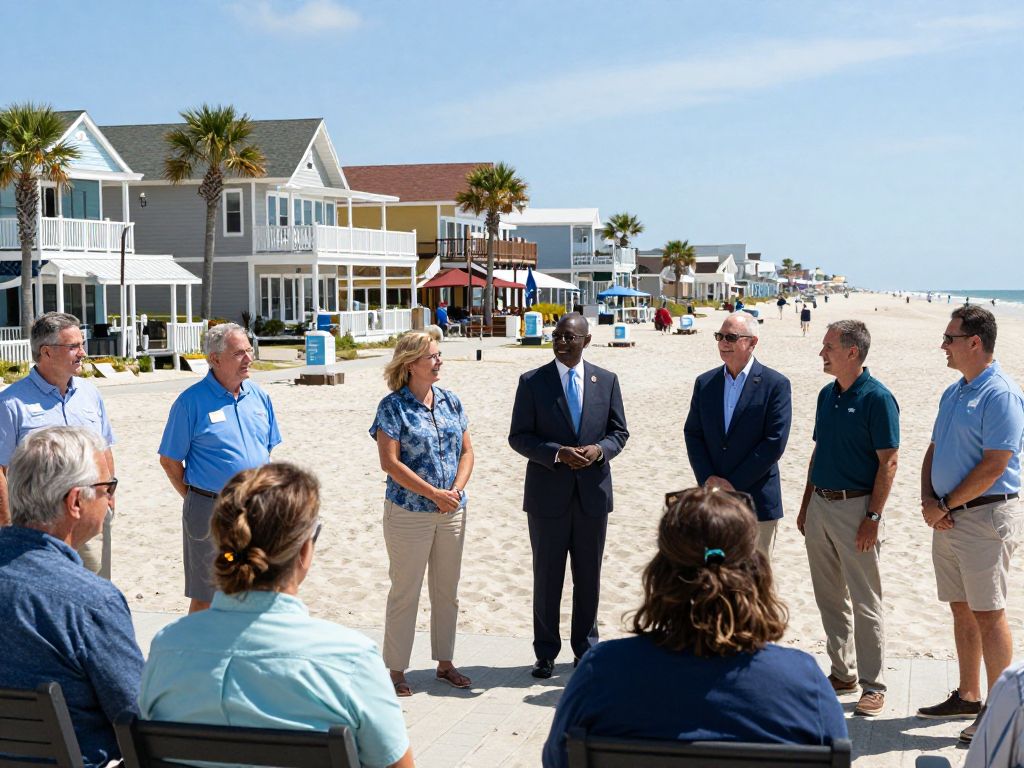
Myrtle Beach has marked a significant transition in its leadership, with Mark Kruea officially sworn in as the city’s new mayor on Tuesday, January 13, 2026. This event concludes an eight-year tenure by the previous mayor and signals a fresh direction for the coastal community. Discussions surrounding Mayor Kruea’s initial agenda and priorities are actively underway, focusing on core areas such as public safety, fiscal responsibility, and enhancing community engagement.
Among the first impactful actions of the new administration was the introduction of a motion to discontinue the scheduled “flushing” traffic pattern on Ocean Boulevard. This practice, formally known as the Summer Emergency Vehicle Access Plan (SEVAP), previously rerouted northbound traffic seasonally. Mayor Kruea asserted that this diversion conveyed an unfavorable image, contributing to a reported 40% decline in revenues for local businesses last year and adversely affecting tourism. While advocating for the cessation of automatic rerouting, the motion maintains that law enforcement will retain the capacity to manage traffic as necessary for public safety.
The New Mayor’s Priorities Unfold
Mayor Kruea, who was elected in November 2025 and commenced his four-year term in January 2026, brings extensive experience to the role, having served as a city spokesperson for 26 years before his retirement last April. His first City Council meeting after being sworn in on Tuesday, January 13, 2026, involved an array of legislative initiatives and planning discussions, setting the stage for his administration’s trajectory.
Public Safety and Fiscal Stewardship
A central tenet of Mayor Kruea’s agenda is the reinforcement of public safety through the recruitment of additional police officers to address existing vacancies within the department. Concurrently, he aims to instill greater accountability and involvement from the City Council in the municipal budgeting process. This emphasis on fiscal stewardship comes amidst reports that the city’s budget had nearly doubled over the past seven years, reaching $361 million in 2026, with overall debt climbing to $255 million. The mayor has expressed a desire to move beyond what he characterized as a “rubber-stamping” approach to budget approvals.
Revisiting the Tourism Development Fee
Another significant area of focus is the Tourism Development Fee (TDF). Mayor Kruea plans to revisit and potentially amend this fee to ensure a more effective utilization of funds. His proposals include revising the allocations dedicated to destination advertising and capital projects linked to tourism, reflecting a desire to optimize financial resources for the benefit of the entire city.
Strengthening Community and Business Relationships
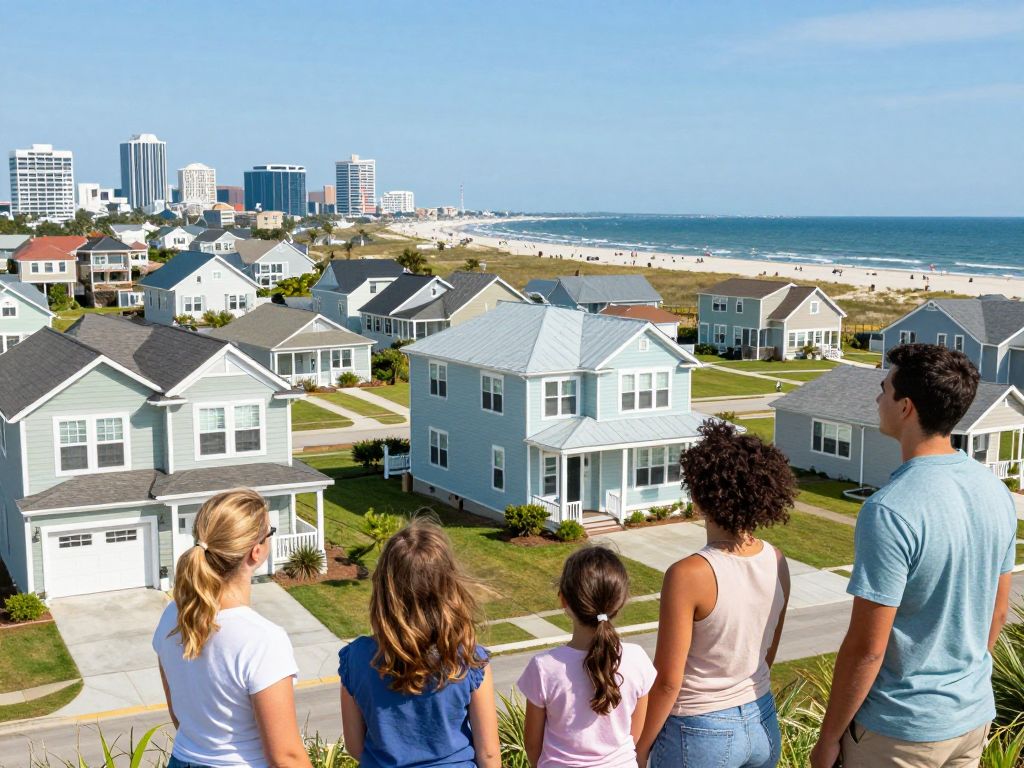
Fundamental to the new administration’s approach is the commitment to fostering improved communication and working relationships between the city, its residents, and the business community. Acknowledging previous perceptions of the city being challenging to interact with, Mayor Kruea seeks to cultivate a more collaborative environment. His vision extends beyond the downtown area, advocating for a “whole-city vision” that addresses neighborhoods and standardizes maintenance across all districts. This includes a dedicated effort to enhance the experiences of both residents and tourists beyond the confines of the Arts and Innovation District.
A Broader Vision for Myrtle Beach
Mayor Kruea has indicated a strategic outlook for his first six months in office, viewing this period as crucial for establishing clear direction and ensuring the new budget is effectively in place by July 1st. He encourages residents to voice their concerns and contribute their insights, signifying an administration intent on listening and responsive governance.
Historical Context of Leadership Transition
The city’s mayoral seat was previously held by Brenda Bethune for two terms, totaling eight years, since her initial election in 2017. She was notably the first female mayor of Myrtle Beach. Mark Kruea’s electoral victory in November 2025, where he secured over 51% of the votes against the incumbent and other candidates, underscored a prevailing sentiment for change among the electorate. The administration’s prior concentration on downtown redevelopment, involving an investment exceeding $100 million in the Arts & Innovation District, has been a subject of community discussion, leading to Mayor Kruea’s push for a more comprehensive, city-wide focus.
Frequently Asked Questions
- What is the most critical information regarding Myrtle Beach’s new mayor?
- Myrtle Beach has a new mayor, Mark Kruea, who was sworn into office on Tuesday, January 13, 2026. He is the first new mayor in eight years. His initial agenda focuses on public safety, city budgeting, amending the Tourism Development Fee (TDF), and strengthening government relationships with residents and businesses. A significant early action involved a motion to end the scheduled “flushing” traffic plan on Ocean Boulevard, which rerouted traffic seasonally.
- When was Mark Kruea sworn in as mayor?
- Mark Kruea was officially sworn in as the new mayor of Myrtle Beach on Tuesday, January 13, 2026.
- What are some of Mayor Kruea’s initial priorities?
- Mayor Kruea’s initial agenda focuses on public safety, city budgeting, amending the Tourism Development Fee (TDF), and strengthening government relationships with residents and businesses. Specific initiatives include recruiting more police officers and increasing City Council’s involvement in the budget process.
- What is the “flushing” traffic plan, and what is its current status?
- The “flushing” traffic plan, or Summer Emergency Vehicle Access Plan (SEVAP), previously rerouted northbound traffic on Ocean Boulevard seasonally. Mayor Kruea introduced a motion to discontinue this scheduled practice, arguing it negatively impacts tourism and local businesses. While the scheduled rerouting would end, police would still maintain the ability to divert traffic as needed.
- How long has it been since Myrtle Beach had a new mayor?
- Mark Kruea is the first new mayor in Myrtle Beach in eight years.
- What is Mayor Kruea’s approach to city-wide development?
- Mayor Kruea advocates for a “whole-city vision” that extends beyond the downtown area, aiming to address neglected neighborhoods and standardize maintenance across all districts, improving experiences for residents and tourists outside the Arts and Innovation District.
Key Features of Mayor Kruea’s Initial Agenda
| Area of Focus | Key Initiative / Goal | Impact / Rationale |
|---|---|---|
| Leadership Transition | First new mayor in eight years. | Signals a significant change in the city’s governance and direction. |
| Traffic Management | Motion to end scheduled “flushing” on Ocean Boulevard. | Aims to improve tourism and support local businesses, which reported revenue declines. |
| Public Safety | Recruiting more police officers. | Addresses existing vacancies and strengthens law enforcement presence. |
| City Budgeting | Increase City Council involvement; scrutinize budget growth. | Seeks to move away from “rubber-stamping” and achieve fiscal efficiencies in the budget that nearly doubled in seven years. |
| Tourism Development Fee (TDF) | Revisiting and amending the TDF. | Ensures more effective utilization of funds for destination advertising and tourism-related projects. |
| Community & Business Relations | Strengthening communication and working relationships. | Addresses perceptions of the city being “difficult to deal with” and fosters a collaborative environment. |
| City-Wide Development | Adopting a “whole-city vision.” | Shifts focus beyond downtown redevelopment to address neglected neighborhoods and standardize maintenance across all districts. |
| Administrative Timeline | Focus on a six-month plan. | Aims to establish clear direction and implement the new budget by July 1st. |
Deeper Dive: News & Info About This Topic
HERE Resources
Man Faces Charges for Attempted Murder in Murrells Inlet
Myrtle Beach Reassesses Tourism Policies Along Ocean Boulevard
Horry-Georgetown Technical College: A Catalyst for Workforce Development
Coastal Carolina University Fosters Student Leadership and Community Engagement
Mild Winter Weather Invites Leisure in Myrtle Beach
Myrtle Beach Faces Crucial Environmental Challenges
Dr. Lori Heafner Ascends to Academic Affairs Leadership at HGTC
Chanticleers Fall in Overtime Thriller
Myrtle Beach Welcomes New Mayoral Leadership
Horry County’s Stormwater Strategy: Building a Resilient Future

Author: STAFF HERE MYRTLE BEACH
The HERE Myrtle Beach Staff Writers are a collaborative team of journalists, editors, and local contributors passionate about delivering accurate, timely information to the Myrtle Beach community. As part of the HEREcity.com Network, which powers over 100 U.S. city sites including HEREcolumbia.com, our staff draws on collective experience in South Carolina journalism to cover everything from business sales and real estate developments to dining deals and community initiatives. Our Expertise and Background Local Roots in Myrtle Beach Our team includes lifelong Myrtle Beach residents and SC natives with deep knowledge of the area’s history, economy, and culture. We’ve covered key events like the recent developments along the Grand Strand, Myrtle Beach’s tourism and hospitality industry, and growth in local education sectors (e.g., Coastal Carolina University programs). Collective Experience With over 50 combined years in journalism, our staff has backgrounds in print, digital media, and community reporting. We prioritize fact-based stories, drawing from sources like the Myrtle Beach Area Chamber of Commerce, city government records, and on-the-ground interviews. Commitment to Quality Every article is a group effort, involving research, editing, and verification to ensure reliability. We adhere to journalistic standards, citing credible sources and updating content as new details emerge.