

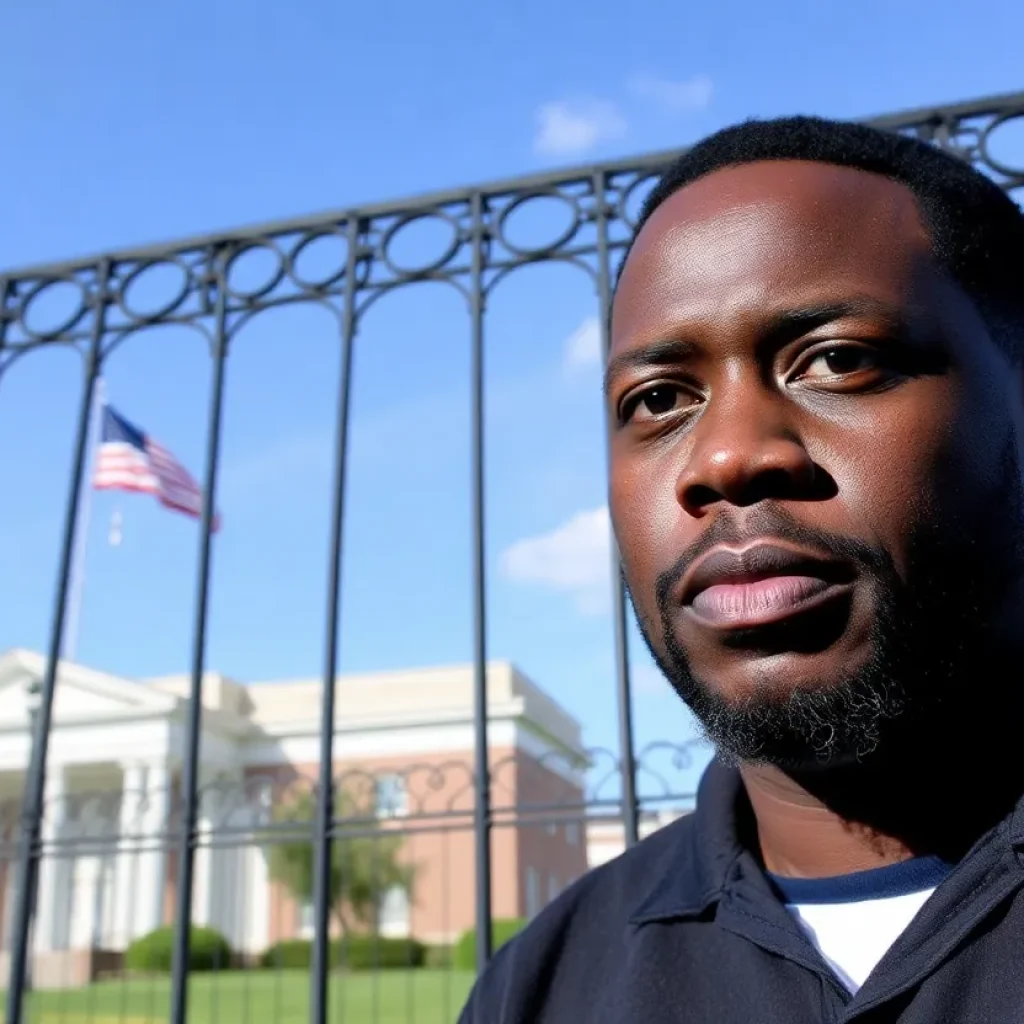
COLUMBIA, S.C. — Execution Date Set for Richard Moore Amid Racial Disparity Claims
Richard Moore is set to be executed in South Carolina on November 1, following his conviction for the 1999 murder of a convenience store clerk. The case has attracted attention from several advocates who argue that it underscores significant racial disparities in the capital punishment system.
The Crime and Conviction
Moore, now on death row, committed the crime in Spartanburg County when he attempted to rob a convenience store. Reports indicate that during the robbery, he was unarmed but took a gun from the clerk. A struggle ensued, during which Moore fatally shot the clerk, James Mahoney, who was 40 at the time. Moore’s son, Lyndall Moore, expressed concerns over his father’s conviction, emphasizing that no African Americans were part of the jury that found him guilty.
“He’s a human being who made mistakes,” said Lyndall Moore, alluding to the disparity in representation during his father’s trial. “This particular mistake led to the death of another human being. But his sentence is completely disproportionate to the actual crime.”
Legal Actions and Appeals
Moore’s legal team is now appealing to the U.S. Supreme Court, arguing that the absence of Black jurors raises significant questions about the fairness of the trial. This is particularly notable given that the 2000 U.S. Census indicated that Spartanburg County was 20% Black.
The state recently resumed executions after a 13-year hiatus, with the lethal injection of another inmate, Freddie Owens. With Moore’s upcoming execution, supporters are advocating for clemency from South Carolina Governor Henry McMaster, who has historically sided with jury decisions, highlighting a trend in state politics.
Arguments for Clemency
Moore’s family and legal representatives are stressing the need for a reprieve, citing his good behavior during incarceration and efforts to support other inmates. Attorney Lindsey Vann stated, “He’s very remorseful and sorry for the horrible, tragic decisions he made in his life. He has spent the past 20 years trying to make up for that.”
The case has ignited discussions about the role of race in capital punishment cases, particularly in a state where prosecutions can reflect political agendas. Many supporters argue that death penalty cases often do not align with the most heinous crimes, thus raising questions about fairness in sentencing.
Criticism of the Judicial Process
Critics have posited that Moore’s trial reflects systemic issues within South Carolina’s justice framework. “There’s a white prosecutor, white judge, and an all-white jury, and he’s the only person in the room who is African American,” Vann noted. Such conditions raise concerns of bias and hinder the notion of a fair trial.
The Governor’s Role in Clemency
As the only individual with the power to grant clemency, Governor McMaster’s decision on Moore’s fate remains crucial. Historically, he has shown reluctance in such matters. “There’s a time for mercy, ladies and gentlemen. That time has come and gone,” said former prosecutor Trey Gowdy during Moore’s trial.
Future Implications
The outcome of this case is pivotal, not only for Richard Moore but also for broader discussions on the injustices surrounding capital punishment. As supporters rally and spread awareness of Moore’s situation, many hope that as more people learn about him, the urgency of addressing these pressing issues becomes apparent.
“He’s not some menacing figure. He’s just a regular dude,” said Lyndall Moore, reflecting on his father’s transformation during incarceration. Time will tell if his father’s past will overshadow his present rehabilitation and attempts to contribute positively.


Author: STAFF HERE MYRTLE BEACH
The HERE Myrtle Beach Staff Writers are a collaborative team of journalists, editors, and local contributors passionate about delivering accurate, timely information to the Myrtle Beach community. As part of the HEREcity.com Network, which powers over 100 U.S. city sites including HEREcolumbia.com, our staff draws on collective experience in South Carolina journalism to cover everything from business sales and real estate developments to dining deals and community initiatives. Our Expertise and Background Local Roots in Myrtle Beach Our team includes lifelong Myrtle Beach residents and SC natives with deep knowledge of the area’s history, economy, and culture. We’ve covered key events like the recent developments along the Grand Strand, Myrtle Beach’s tourism and hospitality industry, and growth in local education sectors (e.g., Coastal Carolina University programs). Collective Experience With over 50 combined years in journalism, our staff has backgrounds in print, digital media, and community reporting. We prioritize fact-based stories, drawing from sources like the Myrtle Beach Area Chamber of Commerce, city government records, and on-the-ground interviews. Commitment to Quality Every article is a group effort, involving research, editing, and verification to ensure reliability. We adhere to journalistic standards, citing credible sources and updating content as new details emerge.