
‘Vindicated’: Columbia University’s Gaza protesters react as Shafik resigns
In a surprising turn of events, Nemat “Minouche” Shafik, the embattled President of Columbia University in New York, announced her resignation on Wednesday, bringing both relief and apprehension amongst student protesters. The protesters, who had been campaigning against Shafik’s ‘strong-arm’ tactics to suppress anti-war demonstrations, expressed cautious optimism for a change in the university’s stance.
High Hopes
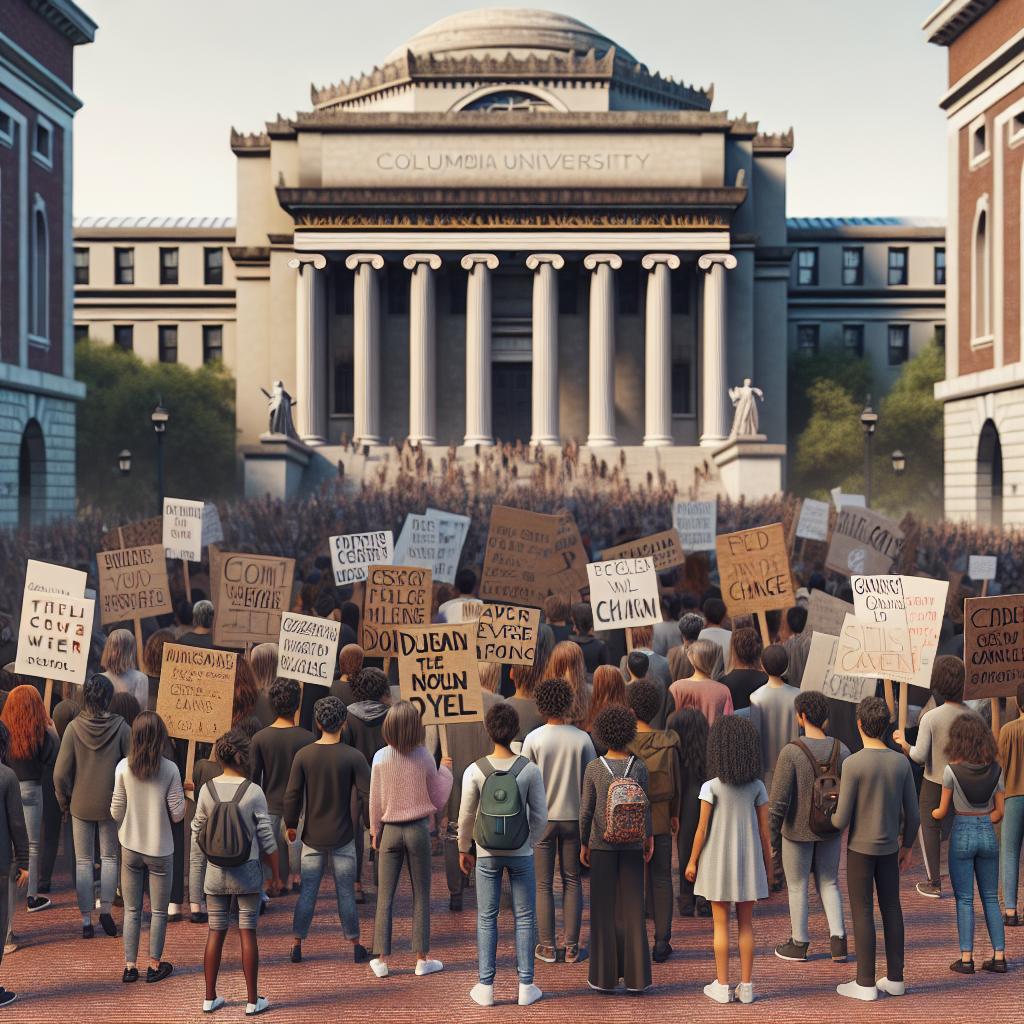
Amidst the list of feelings that the resignation provoked amongst the young protesters, one of them was a sense of personal vindication for 22-year-old Maryam Alwan. In the spring, Alwan was one of the leading voices in the student demonstrations, drawn into action by the fatalities in Gaza during Israel’s war. Students had set up a “Gaza solidarity encampment” on campus in April—which was violently disbanded by the police upon university administration’s orders—to pressurize Columbia into divestment from any investments related to Israel’s military campaign and call for a ceasefire.
Alwan, a prominent figure in the group Students for Justice in Palestine, spoke about her renewed resolve to continue her fight for divestment. “I have no illusions,” she said, mindful that the removal of a figurehead does not equate to the fulfillment of their demands.
A Tumultuous Tenure
Shafik’s time at the helm of Columbia University was mired in controversy due to her handling of the campus tensions. Shafik, in an attempt to emphasize on her efforts towards upholding academic principles while being fair and compassionate, incited the ire of many faculty members.
Professor of psychology, Carl Hart, criticized the punitive approach to handling the protesters adopted by the former University president and her administration. This included calling the New York Police Department twice in April to expel protesters from the camp and forcibly remove those that had taken over a campus building, putting students and faculty under “unnecessary risk”. He also censured Shafik’s capitulation to lawmakers accusing students and professors of anti-Semitism at a hearing.
The allegations of anti-Semitic behavior led to a vote of no confidence in Shafik from Columbia’s Faculty of Arts and Sciences. An oversight panel, upon inspection, also criticized the administrative actions against the protesters, claiming they threatened academic freedom. However, it fell short of calling for Shafik to step down.
Future Possibilities
Reacting to the changes at the top of the university administration, Nara Milanich, a professor of history at Barnard College, sees Shafik’s departure as “a welcome opportunity for a major reset”. She calls for Shafik’s successor to prioritize engagement with faculty and students, and to emphasize freedom of expression and academic freedom.
There are concerns about the university’s proposed recourses to curb future activism. There have been suggestions that the university might empower its security officers to carry out arrests. Many view this as a possible escalation in the administration’s measures to suppress student activism. Cameron Jones, a 20-year-old urban studies major and lead organizer for Columbia’s Jewish Voice for Peace, voiced worries over this development. Despite concerns, he remains firm in his resolve to continue demanding divestment until Palestine is free.
This incident at Columbia University offers a reflection of a broader American campus cultural shift towards greater political involvement and activism, particularly with regard to issues of global importance. With university administrations feeling the heat from students taking up local and global causes, it remains to be seen how they adapt to this changing landscape.


Author: STAFF HERE MYRTLE BEACH
The HERE Myrtle Beach Staff Writers are a collaborative team of journalists, editors, and local contributors passionate about delivering accurate, timely information to the Myrtle Beach community. As part of the HEREcity.com Network, which powers over 100 U.S. city sites including HEREcolumbia.com, our staff draws on collective experience in South Carolina journalism to cover everything from business sales and real estate developments to dining deals and community initiatives. Our Expertise and Background Local Roots in Myrtle Beach Our team includes lifelong Myrtle Beach residents and SC natives with deep knowledge of the area’s history, economy, and culture. We’ve covered key events like the recent developments along the Grand Strand, Myrtle Beach’s tourism and hospitality industry, and growth in local education sectors (e.g., Coastal Carolina University programs). Collective Experience With over 50 combined years in journalism, our staff has backgrounds in print, digital media, and community reporting. We prioritize fact-based stories, drawing from sources like the Myrtle Beach Area Chamber of Commerce, city government records, and on-the-ground interviews. Commitment to Quality Every article is a group effort, involving research, editing, and verification to ensure reliability. We adhere to journalistic standards, citing credible sources and updating content as new details emerge.