

News Summary
The Georgetown County Council is moving forward with an ordinance that would implement restrictions on beach fishing during summer months. The proposed rules include banning bait and surf fishing on public beaches from 7:30 a.m. to 7 p.m. and prohibiting commercial fishing, particularly targeting shark fishing practices. This decision is influenced by community safety concerns and aims to balance local fishing interests against tourism demands. Local business owners express fears that these restrictions could disrupt their operations as the final vote approaches.
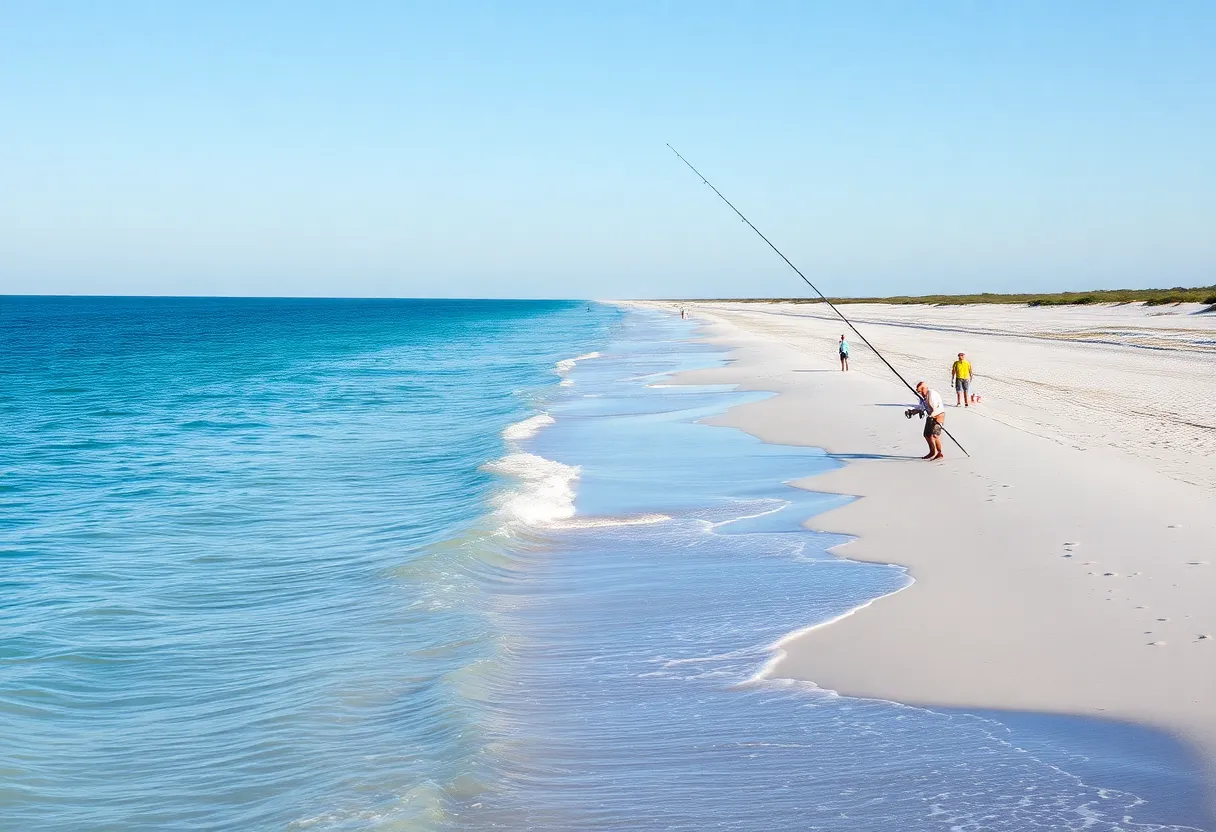
Georgetown, South Carolina – The Georgetown County Council voted unanimously on July 8 to move forward with a controversial ordinance that proposes restrictions on beach fishing during the peak summer season. The ordinance will prohibit bait and surf fishing on public beaches from 7:30 a.m. to 7 p.m., effective from May 1 through September 30. It will also ban commercial fishing, as well as fishing for sharks and other potentially dangerous species on these public shores.
While the current county laws already prohibit fishing that creates unsafe conditions for beachgoers, the proposed ordinance specifically targets practices associated with “Land Based Shark Fishing Tours,” which have attracted concerns from residents and officials alike. A final vote on the ordinance will occur on July 22, with an eye toward addressing community safety and environmental issues.
Georgetown County’s proposed fishing restrictions come in response to increasing public concern about the safety of beachgoers and the potential hazards of fishing, especially for sharks, which are historically significant in the coastal region. Notably, Horry County, a neighboring locality, has already implemented a ban on shark fishing. There is a cultural backdrop to these restrictions, as areas along the coast have a history of notable shark catches, including a large tiger shark that was caught in 1964, which is part of the local fishing heritage.
Local fishing enthusiasts and business owners have raised alarms online, suggesting that the ordinance prioritizes tourists over the local community. Some residents express skepticism about the county’s assurances that fishing will not be completely banned, fearing that these restrictions may evolve into permanent legislation if passed. The growing backlash illustrates a divide within the community regarding fishing practices and tourism interests.
Council Chairman Clint Elliott emphasized that the ordinance is not designed to hinder legal recreational fishing; rather, it arises from specific complaints regarding shark fishing tours. In consultation with the South Carolina Department of Natural Resources, Elliott sought guidance to understand and address these community safety concerns.
Greg Haskins, the owner of a fishing tour business, is particularly worried that the proposed ordinance could jeopardize his operations, as shark fishing constitutes a significant component of his business model. He argues that imposing bans based on safety fears is not only irrational, but it could also create a hazardous precedent for future regulations. Haskins is looking for a mutually agreeable solution with county officials but has stated that he will pursue legal avenues if the ordinance moves forward without consideration for his business.
Concerns are not limited to fishing tour operators; other local businesses are also wary of the ordinance’s potential implications for their operations. Owners fear that the balance between serving tourists and catering to local fishing interests may be upset, which could impact their bottom lines. Additionally, the absence of specified penalties, including fines or jail time, for violation of the proposed fishing restrictions has raised uncertainty regarding enforcement and compliance with the law.
As the July 22 final vote approaches, the council must weigh the voices of local stakeholders against public safety concerns and the environmental implications of summer beach fishing. The upcoming decision could reshape fishing practices along Georgetown’s coastline, significantly impacting both local culture and economy for the foreseeable future.
Deeper Dive: News & Info About This Topic
HERE Resources
Contentious Coastal Bill Advances in South Carolina Senate
Myrtle Beach Spring Break: Know the Rules
Additional Resources
- WMBF News: Georgetown County Fishing Ban Controversy
- Wikipedia: Fishing
- ABC News 4: Proposed Fishing Restrictions Debate
- Google Search: Georgetown County fishing ordinance
- Myrtle Beach Online: Fishing Ordinance Updates
- Google Scholar: Georgetown County fishing controversy
- Count on 2: Georgetown County Surf Fishing Ban
- Encyclopedia Britannica: Fishing
- Coastal Observer: County Limits Surf Fishing
- Google News: Georgetown County fishing restrictions


Author: STAFF HERE MYRTLE BEACH
The HERE Myrtle Beach Staff Writers are a collaborative team of journalists, editors, and local contributors passionate about delivering accurate, timely information to the Myrtle Beach community. As part of the HEREcity.com Network, which powers over 100 U.S. city sites including HEREcolumbia.com, our staff draws on collective experience in South Carolina journalism to cover everything from business sales and real estate developments to dining deals and community initiatives. Our Expertise and Background Local Roots in Myrtle Beach Our team includes lifelong Myrtle Beach residents and SC natives with deep knowledge of the area’s history, economy, and culture. We’ve covered key events like the recent developments along the Grand Strand, Myrtle Beach’s tourism and hospitality industry, and growth in local education sectors (e.g., Coastal Carolina University programs). Collective Experience With over 50 combined years in journalism, our staff has backgrounds in print, digital media, and community reporting. We prioritize fact-based stories, drawing from sources like the Myrtle Beach Area Chamber of Commerce, city government records, and on-the-ground interviews. Commitment to Quality Every article is a group effort, involving research, editing, and verification to ensure reliability. We adhere to journalistic standards, citing credible sources and updating content as new details emerge.