

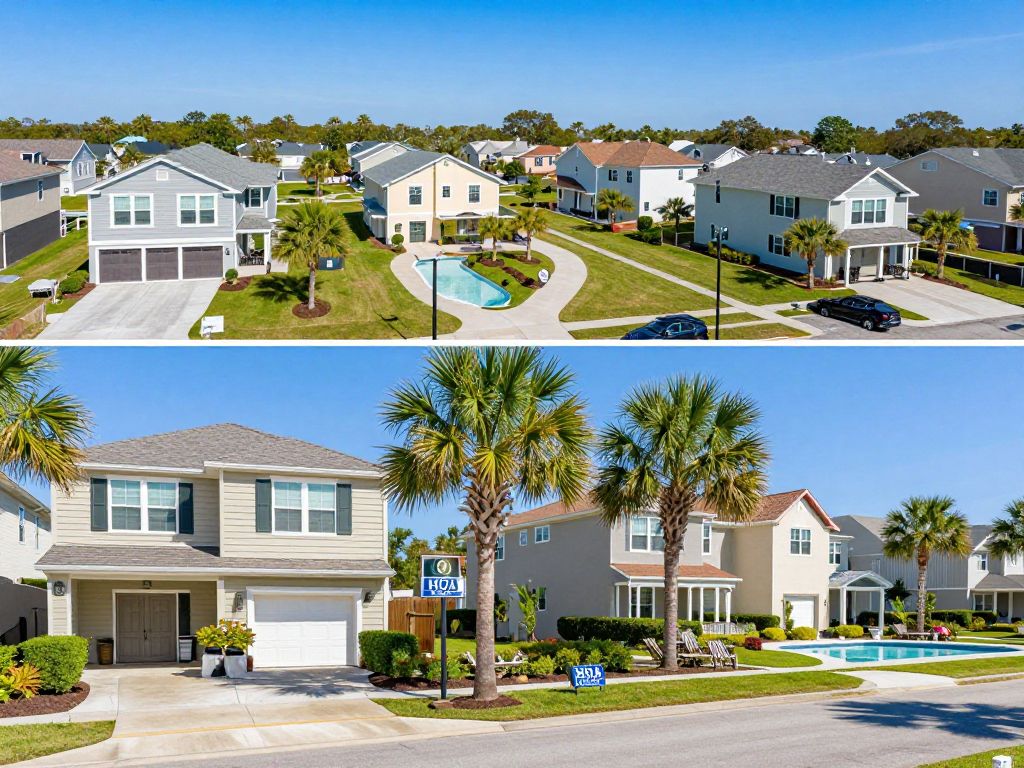
Myrtle Beach, SC, January 27, 2026
As HOA fees continue to rise, understanding their implications is essential for homeowners and prospective buyers, especially in Myrtle Beach. The growing prevalence of HOA fees is impacting affordability and property values, making it critical to navigate these changes effectively. This shift poses challenges and opportunities for both current residents and those looking to invest in properties within these communities.
WHAT’S HAPPENING
What is the current trend regarding Homeowners Association (HOA) fees in the housing market?
Observe a significant nationwide trend of increasing Homeowners Association (HOA) fees and their expanding presence in the housing market. This shift is reshaping real estate dynamics and affecting affordability for homeowners and buyers alike.
How much have HOA fees and their prevalence increased recently across the U.S.?
Data indicates that nearly 44% of U.S. homes listed for sale in 2025 carried HOA dues, a notable rise from 34.3% in 2019, while the median monthly HOA fee increased to $135 nationwide in 2025.
What are the primary implications of rising HOA fees for property owners and the market?
Rising fees add another layer to the affordability equation for buyers and increase the cost of living for current homeowners, potentially influencing purchasing decisions and overall property demand. While HOAs offer benefits like maintenance, high costs can deter buyers if value isn’t clearly demonstrated.
How do national HOA fee trends impact local markets like Myrtle Beach, SC?
These national trends invariably ripple into local markets such as Myrtle Beach, affecting property attractiveness, influencing residents and investors, and creating an expanding market for local real estate and property management businesses. Understanding these shifts is vital for the local economy.
What is crucial for Homeowners Associations to effectively manage increasing fees and maintain resident satisfaction?
Prioritize transparency, efficient management, and clear communication with residents to demonstrate value for the dues collected. HOAs must provide superior common area maintenance, security services, or desirable amenities to ensure resident satisfaction and the community’s long-term health.
Myrtle Beach, SC
HOA Fees on the Rise: Navigating a Shifting Housing Landscape
For homeowners and prospective buyers in Myrtle Beach and across the nation, understanding the evolving dynamics of housing costs is paramount. A significant trend gaining momentum is the increasing prevalence and cost of Homeowners Association (HOA) fees, a factor that continues to reshape the real estate market.
Entrepreneurial spirit and sound financial planning are cornerstones of a thriving community, and the landscape of homeownership, particularly concerning associated costs, directly impacts both. As more properties come under the purview of Homeowners Associations, it’s crucial for our community to grasp the implications for affordability, property values, and the overall economic health of areas like Myrtle Beach. This national trend, while offering certain benefits in community management, also presents new considerations for individual homeowners and the broader housing market.
The Expanding Reach of Homeowners Associations
Data indicates a steady expansion of Homeowners Associations across the U.S. housing market. In 2025, nearly 44% of homes listed for sale nationwide carried monthly HOA dues. This marks a notable increase from just 34.3% in 2019, highlighting a significant shift in the structure of homeownership. This growing presence means that a larger segment of the housing market now involves these additional monthly financial commitments.
The median HOA fee nationwide has also seen an ascent. It rose to $135 in 2025, reflecting an additional recurring expense that homeowners must factor into their budgets alongside mortgage payments, property taxes, and insurance. For many, these fees contribute to the maintenance of shared amenities, common areas, and often, the enforcement of community standards, which can be a double-edged sword: offering perceived value and convenience while adding to the monthly financial outlay.
Understanding the Impact on Property Owners and Markets
The rise in HOA fees has direct implications for homeowners and those aspiring to join their ranks. While HOAs can offer benefits such as maintaining property values through consistent upkeep and providing community services, the escalating costs can also present challenges. For current homeowners, increasing dues mean a higher cost of living in their homes. For prospective buyers, these fees add another layer to the affordability equation, potentially influencing purchasing decisions and impacting the overall demand for certain types of properties.
The market response to these trends is complex. On one hand, well-managed HOAs with transparent financials and valuable amenities can be attractive to buyers seeking a particular lifestyle or level of maintenance. On the other hand, high or rapidly increasing HOA fees can deter buyers, especially in a market where affordability is already a key concern. This necessitates a careful balance, where the value provided by an HOA must clearly justify its cost to attract and retain residents.
Key Features of Rising HOA Fees (Nationwide)
| Feature | Value | Scope |
|---|---|---|
| Percentage of U.S. Homes for Sale with HOA Fees (2025) | Nearly 44% | Nationwide |
| Percentage of U.S. Homes for Sale with HOA Fees (2019) | 34.3% | Nationwide |
| Median Monthly HOA Fee (2025) | $135 | Nationwide |
Considering the Myrtle Beach Context
While the presented statistics on HOA fees are nationwide, these trends invariably ripple into local markets like Myrtle Beach, SC. The unique blend of residential communities, seasonal properties, and new developments in our area means that many local residents and investors will encounter HOA structures. The growth in HOA-governed properties nationally suggests that Myrtle Beach small businesses, from property management companies to landscaping services, will find an expanding market for their expertise. Furthermore, for South Carolina entrepreneurs in the real estate sector, understanding these evolving costs is vital for effectively serving clients and guiding development.
The presence and cost of HOAs can influence the attractiveness of different neighborhoods and housing types. Communities with well-maintained common areas, funded by reasonable HOA fees, might appeal to those seeking a turn-key lifestyle or specific amenities. Conversely, properties with high or unpredictable fees might face scrutiny from budget-conscious buyers. The balance between community benefits and financial burden is a constant consideration for the Myrtle Beach economy and its housing market.
Promoting Transparency and Value in Community Living
For Homeowners Associations themselves, the increasing focus on fees underscores the importance of transparency, efficient management, and clear communication with residents. Providing demonstrable value for the dues collected—whether through superior common area maintenance, security services, or desirable amenities—is essential for resident satisfaction and the long-term health of the community. Innovative approaches to community management and cost efficiency can help HOAs navigate these rising financial pressures while continuing to serve their members effectively.
As the number of HOA-governed properties grows, residents often seek clear governance and accountability from their association boards. This desire for well-run communities that responsibly manage funds aligns with the broader principle of efficient local governance and private sector stewardship, ensuring that homeowner investments are protected and enhanced.
In conclusion, the nationwide trend of increasing HOA fees and their expanding presence in the housing market is a significant development for homeowners and real estate professionals alike. For Myrtle Beach SC business and community members, staying informed about these national shifts is key to understanding our local housing market’s future. By embracing transparency, prioritizing value, and fostering responsible community leadership, we can navigate these evolving trends to ensure continued economic vitality and desirable living options for residents. We encourage all homeowners and prospective buyers to thoroughly research HOA structures and fees in any community they consider, and to engage actively in discussions about our local housing future.
Deeper Dive: News & Info About This Topic
HERE Resources
Golfing in Coastal Comfort: Affordable Living in Myrtle Beach
Myrtle Beach Golf Community Faces HOA Restrictions on Holiday Cheer
Myrtle Beach Faces Rising Homeowners Association Complaints in 2024
Myrtle Beach Dreams Turned to Nightmares for Local Couple

Author: STAFF HERE MYRTLE BEACH
The HERE Myrtle Beach Staff Writers are a collaborative team of journalists, editors, and local contributors passionate about delivering accurate, timely information to the Myrtle Beach community. As part of the HEREcity.com Network, which powers over 100 U.S. city sites including HEREcolumbia.com, our staff draws on collective experience in South Carolina journalism to cover everything from business sales and real estate developments to dining deals and community initiatives. Our Expertise and Background Local Roots in Myrtle Beach Our team includes lifelong Myrtle Beach residents and SC natives with deep knowledge of the area’s history, economy, and culture. We’ve covered key events like the recent developments along the Grand Strand, Myrtle Beach’s tourism and hospitality industry, and growth in local education sectors (e.g., Coastal Carolina University programs). Collective Experience With over 50 combined years in journalism, our staff has backgrounds in print, digital media, and community reporting. We prioritize fact-based stories, drawing from sources like the Myrtle Beach Area Chamber of Commerce, city government records, and on-the-ground interviews. Commitment to Quality Every article is a group effort, involving research, editing, and verification to ensure reliability. We adhere to journalistic standards, citing credible sources and updating content as new details emerge.