
Myrtle Beach, SC, January 24, 2026
Horry County’s recent rejection of a $48 million real estate investment plan underscores the complexities of attracting private capital while balancing local regulations. This decision opens discussions on the county’s economy, tax policies, and the importance of fostering a stable business environment. As Horry County aims for growth, the interplay between regulations and investment continues to be pivotal for its economic future.
WHAT’S HAPPENING
What significant real estate investment did Horry County recently reject?
Rejected a proposed $48 million real estate investment intended to purchase and demolish properties in unincorporated areas to develop a substantial oceanfront compound, citing the complex interplay of local regulations and developer proposals.
How is Horry County’s economic and financial health currently?
Demonstrates sound financial management, receiving consistent awards for financial reporting and budget presentation, alongside steady economic growth evidenced by increased building permits and a growing GDP.
What role do tax policies play in attracting real estate investors to South Carolina?
Influence investment strategies through state income tax on capital gains (with a 44% deduction) and a distinct property tax system (Act 388) that shifts burden to businesses and renters, making thorough due diligence essential.
What are the main drivers of Horry County’s local economy?
Driven by strong community and business resilience, with tourism as a cornerstone generating $13.2 billion in direct visitor spending in 2024 and contributing to an estimated $26 billion total economic impact.
What is Horry County’s strategy for fostering future economic growth?
Focuses on establishing a clear and predictable investment framework, leveraging its stable financial foundation, and promoting entrepreneurial innovation and efficient regulatory processes to benefit all residents.
Myrtle Beach, SC
Horry County Navigates Investment Landscape After $48 Million Real Estate Rejection
Horry County recently faced a significant decision regarding a substantial real estate investment, highlighting the ongoing dialogue between attracting capital, local regulations, and broader economic considerations. This event provides an opportunity to examine the county’s vibrant economic landscape and the factors influencing its continued growth.
The spirit of entrepreneurship and a thriving business environment are cornerstones of the Myrtle Beach area’s success. As a hub for both established businesses and burgeoning ventures, Horry County’s economic vitality is a testament to the collective efforts of its community. Maintaining a balance that encourages private investment while upholding local interests is crucial for sustained prosperity, ensuring that growth benefits all residents and businesses alike.
A Closer Look at the $48 Million Investment
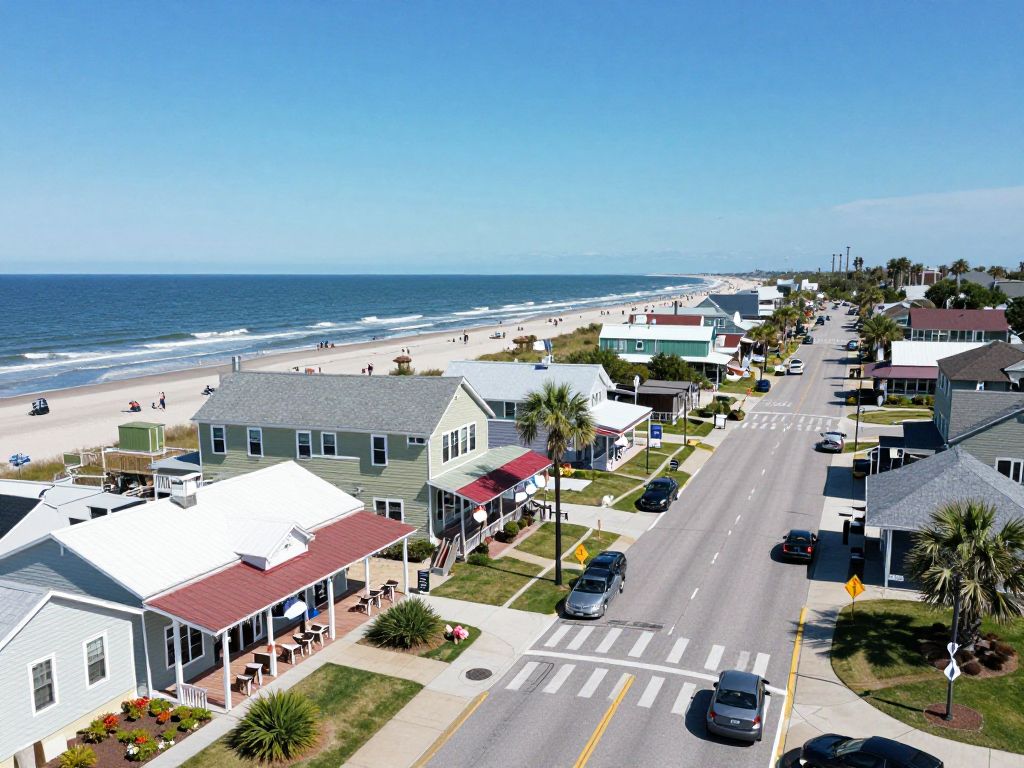
A proposed $48 million real estate investment in Horry County was recently rejected. This investment involved plans to purchase and demolish properties in unincorporated areas of Horry County, with intentions to develop a substantial oceanfront compound. The average price of the homes considered for purchase was $1.7 million each. The rejection of this significant investment underscores the complex interplay of local regulations and developer proposals.
One of the underlying discussions associated with this event involved concerns about attracting wealthy individuals to the state, with some suggesting a broader trend described as “blue state tax flight.” Discussions at the state level in South Carolina in 2025 revolved around the potential for tax reform to make the state more attractive to personal home investors, aiming to compete with other states like Texas, Florida, and Tennessee.
Horry County’s Financial Health and Economic Growth
Horry County, located in the northeastern part of South Carolina, demonstrates a consistent commitment to sound financial management. For the fiscal year ended June 30, 2023, the county published an Annual Comprehensive Financial Report, reflecting its dedication to transparent and high-standard government accounting. The Horry County Finance Department has received awards for its Annual Comprehensive Financial Reports for 37 consecutive fiscal years, from 1987 through 2023. Additionally, the county has received awards for its Distinguished Budget Presentation for 35 consecutive fiscal years, from 1990 through 2024, demonstrating its adherence to strong financial planning.
Economic indicators, such as increased building permits, point to ongoing development within the county. Building permits are necessary for various construction activities, including new commercial and residential projects, and are a key measure of local development. Horry County outlines specific requirements for obtaining these permits, which vary based on the project’s scope and valuation.
The Role of Taxation in Real Estate Investment
Tax policies play a substantial role in influencing real estate investment strategies at the state level. South Carolina taxes capital gains through state income tax, but allows a 44% deduction for qualifying recognized net capital gains. For non-resident sellers, the state may require withholding at closing. Property tax rates vary across regions and can impact the profitability of real estate investments, making thorough due diligence on local tax policies essential for investors.
South Carolina’s property tax system, particularly following Act 388 in 2006, shifted a greater property tax burden from homeowners to businesses and renters, making it somewhat distinct compared to other states. Property taxes serve as a significant revenue source for South Carolina, generating approximately $5.8 billion annually. About half of these property tax dollars fund schools, with businesses contributing most of the property tax revenue for schools since Act 388.
Community and Business Resilience in Myrtle Beach
The Myrtle Beach SC business community continues to exhibit resilience and a proactive approach to economic growth. Horry County residents collectively infused an estimated $30 billion into the local economy during 2025. Tourism remains a cornerstone of the Horry County economy, generating approximately $13.2 billion in direct visitor spending in 2024, marking a 5.3% increase over 2023. This sector contributes to an estimated total economic impact of over $26 billion for the area when accounting for indirect and induced effects, supporting about 82,000 jobs across various industries in the Myrtle Beach-Conway-North Myrtle Beach Metropolitan Statistical Area.
The Gross Domestic Product (GDP) for all industries in Horry County reached $20,348,125 (in thousands of U.S. dollars) in 2023, showing steady growth over previous years. Across South Carolina, the Real Estate and Rental and Leasing sector contributed the largest portion of the state’s GDP in 2023, totaling $47.5 billion. This robust performance underscores the significance of the real estate sector and the broader economy in South Carolina and Horry County.
Key Features of Horry County’s Investment and Economic Landscape
| Feature | Description | Scope |
|---|---|---|
| Rejected Real Estate Investment | A proposed $48 million investment in unincorporated Horry County was rejected. It involved purchasing and demolishing several properties to create an oceanfront compound. | Local |
| Annual Comprehensive Financial Report | Horry County publishes an Annual Comprehensive Financial Report, with awards received for 37 consecutive fiscal years (1987-2023). | Local |
| Distinguished Budget Presentation Award | Horry County has received this award for 35 consecutive fiscal years (1990-2024), indicating strong financial planning. | Local |
| Building Permits | Real estate indicators from increased building permits suggest ongoing development in Horry County. Permits are required for various construction projects. | Local |
| State-level Capital Gains Tax | South Carolina taxes capital gains through state income tax but allows a 44% deduction for qualifying recognized net capital gains. | State-level |
| Property Tax System (Act 388) | South Carolina’s Act 388 (2006) shifted a greater property tax burden from homeowners to businesses and renters. Property taxes are a significant state revenue source. | State-level |
| Horry County Economic Contribution (2025) | Horry County residents collectively contributed an estimated $30 billion to the local economy in 2025. | Local |
| Tourism Economic Impact (2024) | Direct visitor spending in Horry County reached $13.2 billion in 2024, contributing to an estimated total economic impact of over $26 billion for the area. | Local |
| Horry County GDP (2023) | The Gross Domestic Product for all industries in Horry County was $20,348,125 (in thousands of U.S. dollars) in 2023. | Local |
| South Carolina GDP (2023) | The Real Estate and Rental and Leasing sector contributed $47.5 billion to South Carolina’s GDP in 2023. | State-level |
Charting a Course for Future Growth
The recent decision regarding the $48 million real estate investment in Horry County highlights the need for a clear and predictable framework that encourages investment while safeguarding community interests. The county’s commitment to sound financial management, evidenced by its consistent awards for financial reporting and budget presentation, provides a stable foundation. Continued attention to policies that foster an environment for entrepreneurial innovation and small-business resilience will be key to sustaining economic growth in Myrtle Beach and across Horry County.
As Horry County continues to attract new residents and businesses, maintaining open lines of communication and efficient regulatory processes will be vital. We encourage all residents and local businesses to stay engaged in the ongoing discussions about our region’s economic future and to support the South Carolina entrepreneurs who are the backbone of our thriving community. Your involvement helps shape the policies that empower businesses to grow, create jobs, and enhance the quality of life for everyone in the Myrtle Beach area.
Deeper Dive: News & Info About This Topic
HERE Resources
Conway High: Fostering Achievement Through Athletics & Academics
Winter Weather Tests Myrtle Beach Community Adaptability
Coastal Carolina University Seeks State Aid for Growth Initiatives
Conway’s Financial Health: A Foundation for Local Prosperity
Myrtle Beach Weathering Winter Storm Threat: OPCON 2 Activated
Murrells Inlet Arcade Reimagined with New Cantina
Myrtle Beach Businesses Under Fire for Unpaid Taxes
Coastal Carolina University Seeks State Aid for Expansion
Myrtle Beach’s I-73 Project Gains Legislative Attention
Amazon’s Same-Day Delivery Hub Enhances Myrtle Beach Economic Landscape

Author: STAFF HERE MYRTLE BEACH
The HERE Myrtle Beach Staff Writers are a collaborative team of journalists, editors, and local contributors passionate about delivering accurate, timely information to the Myrtle Beach community. As part of the HEREcity.com Network, which powers over 100 U.S. city sites including HEREcolumbia.com, our staff draws on collective experience in South Carolina journalism to cover everything from business sales and real estate developments to dining deals and community initiatives. Our Expertise and Background Local Roots in Myrtle Beach Our team includes lifelong Myrtle Beach residents and SC natives with deep knowledge of the area’s history, economy, and culture. We’ve covered key events like the recent developments along the Grand Strand, Myrtle Beach’s tourism and hospitality industry, and growth in local education sectors (e.g., Coastal Carolina University programs). Collective Experience With over 50 combined years in journalism, our staff has backgrounds in print, digital media, and community reporting. We prioritize fact-based stories, drawing from sources like the Myrtle Beach Area Chamber of Commerce, city government records, and on-the-ground interviews. Commitment to Quality Every article is a group effort, involving research, editing, and verification to ensure reliability. We adhere to journalistic standards, citing credible sources and updating content as new details emerge.