
Myrtle Beach, December 18, 2025
As global economic shifts redefine retail supply chains, Myrtle Beach businesses demonstrate resilience by adapting to new challenges and technological advancements. Local entrepreneurs are embracing innovation through strategic sourcing and technological integration to ensure sustained economic growth. With the rise of tariffs and the trend of nearshoring, Myrtle Beach entrepreneurs are positioning themselves for success while contributing positively to the local economy.
Myrtle Beach Businesses Adapt to a Redefined 2026 Supply Chain
As the global economy continues its dynamic evolution, Myrtle Beach entrepreneurs and small businesses are demonstrating remarkable resilience and innovation, bracing for significant shifts in retail supply chains in 2026. These changes, driven by tariffs, technological advancements, and a move towards nearshoring, present both challenges and compelling opportunities for local economic growth.
The spirit of free enterprise thrives in communities like Myrtle Beach, where adaptability and strategic foresight are key. Rather than simply reacting to external pressures, many local businesses are proactively reshaping their operations to navigate a new landscape. This proactive stance is crucial in fostering a robust local economy and highlights the enduring determination of South Carolina entrepreneurs.
The Shifting Sands of Global Trade: Tariffs and Their Ripple Effects
The retail sector nationwide is undergoing one of its fastest strategic shifts in decades, largely influenced by rising tariffs and geopolitical pressures. Tariffs, essentially taxes on imports, are currently in constant flux, creating uncertainty for retailers and consumers alike. In April 2025, the U.S. implemented a universal 10% levy on all imports, with targeted duties reaching 145% on goods from China. This has led to substantial cost pressure across various retail categories nationwide, with apparel tariffs, for instance, more than doubling from an average of 14.5% in 2024 to 30.6% in 2025. The additional costs for U.S. consumers and importers from previous import tariffs in late 2018 were estimated at approximately $3.2 billion per month, alongside an additional $1.4 billion lost in economic efficiency.
For businesses in Myrtle Beach and across the nation, this means higher costs for imported goods, uncertain pricing, and a potential shift in consumer behavior. To mitigate risk, a significant percentage of retail supply chain leaders (77%) have already shifted sourcing away from China toward tariff-neutral countries. This re-evaluation encourages businesses to explore diversified sourcing models, including domestic options, which can strengthen local production capabilities and reduce dependency on volatile international markets. While higher prices may become the new norm, market adjustments, including improved domestic sourcing, enhanced retailer strategies, and more stable supply chains, can lead to a more consistent and higher-value shopping experience nationwide.
Bridging the Tech Divide: Innovation for Efficiency
Technological advancements are profoundly transforming the retail logistics and supply chain landscape in 2025, driven by evolving consumer expectations and global trade dynamics. The COVID-19 pandemic and escalating tariffs have underscored the importance of diversifying supply chains not just geographically, but also in sourcing strategies and operational models, with AI and machine learning offering a prospective path forward. In 2025, AI was widely adopted, with meaningful progress seen in embedding AI into workflows for applications like evaluating alternates during routing failures in Transportation Management Systems (TMS) and sequencing tasks based on congestion in Warehouse Management Systems (WMS). AI-driven supply chain management is projected to reduce logistics costs by 15% and inventory holding costs by 35% nationwide.
Myrtle Beach is actively embracing this technological evolution. The city has launched a Smart Cities Initiative and a Living Lab program, fostering innovative public-private partnerships to support emerging technology and encourage entrepreneurs to use Myrtle Beach as a hub. This initiative provides space for local businesses, small businesses, and corporations to test new technologies, contributing to business expansion, job creation, and economic growth in the city. Automation in warehousing and retail operations, including electronic shelf labels, self-service tills, and warehouse robots, is gaining traction nationwide to counteract rising labor costs. These investments in technology empower businesses to optimize logistics, manage costs, and meet consumer demands more effectively.
Nearshoring’s Promise: Strengthening Local Supply Lines
The disruptions experienced during the pandemic have permanently altered the global supply chain landscape, accelerating the adoption of resilient supply chains based on nearshoring and reshoring nationwide. Nearshoring involves moving manufacturing operations closer to the point of use, often a neighboring country with lower labor costs. This strategy offers compelling advantages, including faster delivery times, reduced costs, and greater oversight into production. The time it took to ship containers from China to the U.S. more than doubled from approximately 51 days in January 2020 to 107 days in March 2022, whereas shipping products from Mexico can take as little as three days or fewer.
For U.S. businesses, nearshoring manufacturing to places like Mexico can result in quicker delivery of products and significantly lower shipping fees compared to overseas deliveries. This strategic shift can enhance product lifecycle, allowing innovations to occur more quickly, and improve supply chain management responsiveness through predictive analytics. While nearshoring and reshoring present challenges, they also offer tremendous opportunities to transform enterprises and provide rapidly increased innovation to customers nationwide. Many retailers are accelerating their nearshoring and regionalization efforts, driven by a heightened need for control, stability, and agility, not just cost pressure. This decisive break from pre-pandemic supply chain models, which often relied on global consolidation and just-in-time fulfillment, signals a move towards building more resilient logistics networks nationwide.
Myrtle Beach Businesses on the Forefront of Adaptability
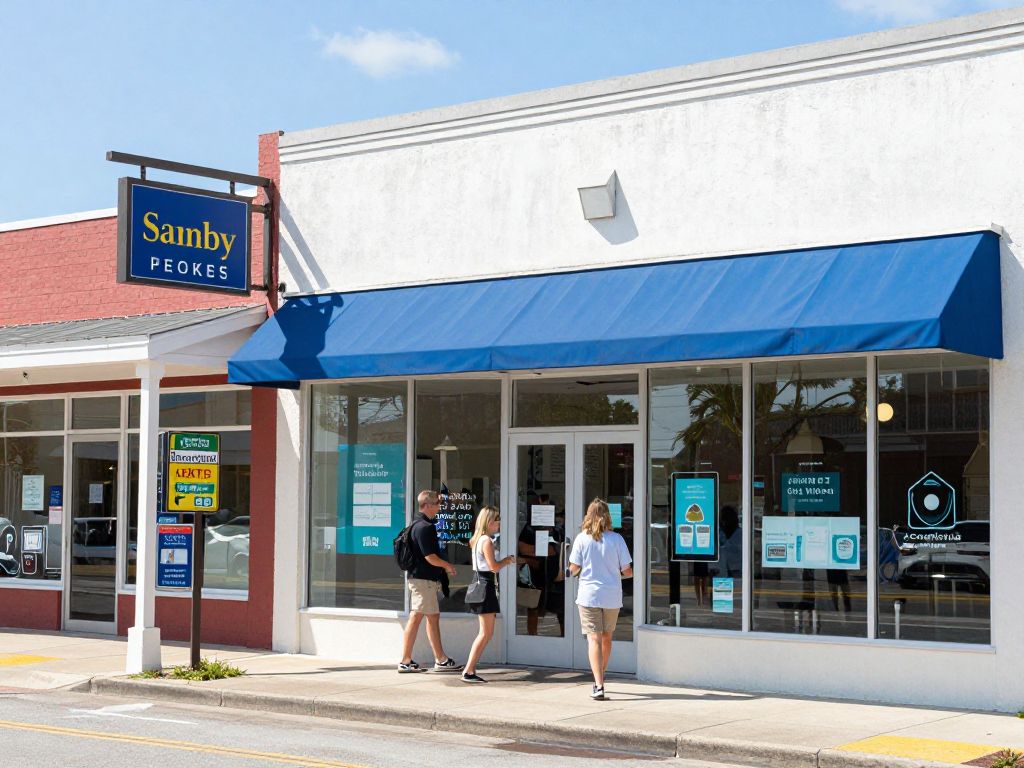
Myrtle Beach’s business community exemplifies the adaptability required in this evolving economic climate. The city is experiencing significant redevelopment in its retail sector, with new shopping centers and planned construction projects underway. For example, a shopping center anchored by Lowes Foods, encompassing 57,659 square feet and featuring a mix of local and national tenants, was sold in Myrtle Beach, illustrating an encouraging evolution in the retail scene. Additionally, plans for new stores like Hobby Lobby are moving forward, with redeveloped areas aiming to create vibrant mixed-use spaces that cater to modern shoppers. A new retail center is also being developed in North Myrtle Beach, featuring plans for new shopping, dining, and fueling opportunities in a fast-growing part of town.
Local businesses are demonstrating resilience and entrepreneurial spirit. A pizza place in Myrtle Beach has reopened under its original owner, showcasing the determination of South Carolina entrepreneurs. The Grand Strand Brewing Co. in Myrtle Beach, SC, continues to contribute to the local economy as a successful venture. Furthermore, Myrtle Beach is seeing a surge in new businesses, including the confirmed opening of a Trader Joe’s store with construction beginning in November 2024 at SayeBrook Town Center, and the planned opening of Guy Fieri’s Downtown Flavortown at the Myrtle Beach Mall. These developments underscore the dynamic and growing business landscape in the Myrtle Beach area.
A Glimpse at the State-level Landscape
The trends seen in Myrtle Beach reflect broader dynamics across South Carolina. For instance, a favorite South Carolina diner that served Cajun food announced its status in December 2024, highlighting the ongoing shifts and adaptations within the state’s diverse culinary and small business sectors. This state-level activity further emphasizes the importance of entrepreneurial agility and strategic planning in maintaining economic vitality across the region.
Conclusion
The retail supply chain landscape in 2026 will undoubtedly be defined by ongoing changes in tariffs, technological integration, and the continued momentum of nearshoring. For Myrtle Beach businesses, these shifts are not merely challenges but catalysts for innovation and strategic realignment. The resilience and entrepreneurial spirit of our local community, coupled with a focus on technological adoption and strengthened domestic supply lines, are paving the way for sustained economic growth. By supporting local businesses, investing in new technologies, and fostering an environment of innovation, we can collectively ensure that Myrtle Beach remains a vibrant hub for commerce and opportunity. We encourage all residents to continue to support our Myrtle Beach small business community and stay engaged in the ongoing narrative of economic growth in our beloved Grand Strand.
Frequently Asked Questions
- What are the primary factors redefining retail supply chains in 2026?
- The primary factors redefining retail supply chains in 2026 are rising tariffs, technology gaps, and the increasing trend of nearshoring.
- How are tariffs impacting retail supply chains nationwide?
- Tariffs are increasing costs for imported goods, causing uncertainty in pricing, and shifting consumer behavior nationwide. In April 2025, the U.S. implemented a universal 10% levy on all imports, with targeted duties reaching 145% on goods from China. Apparel tariffs alone have more than doubled from an average of 14.5% in 2024 to 30.6% in 2025 nationwide.
- What role does technology play in adapting to these supply chain changes?
- Technology, especially AI and machine learning, is crucial for improving efficiency, enabling predictive analytics, demand forecasting, and real-time decision-making in supply chains nationwide. AI-driven supply chain management is projected to reduce logistics costs by 15% and inventory holding costs by 35% nationwide.
- What is nearshoring and its benefits for the U.S. economy?
- Nearshoring involves moving manufacturing operations closer to the point of use, often a neighboring country with lower labor costs. Benefits for the U.S. economy include faster delivery times, reduced costs, greater oversight into production, and enhanced supply chain resilience.
- How is Myrtle Beach adapting to these retail supply chain shifts?
- Myrtle Beach is adapting through significant retail sector redevelopment, new construction projects, and the launch of a Smart Cities Initiative and Living Lab program to support emerging technology and entrepreneurs. Local businesses are showing resilience, with new stores opening and existing ones reopening under original ownership.
Key Features of a Redefined 2026 Retail Supply Chain
| Feature | Description | Scope |
|---|---|---|
| Tariff Impact | Rising costs for imported goods, leading to shifts in sourcing strategies and potential price increases for consumers. Apparel tariffs doubled from 2024 to 2025. | Nationwide |
| Technology Integration | Increased adoption of AI, machine learning, and automation for optimized logistics, improved inventory management, and real-time decision-making. | Nationwide |
| Nearshoring Trend | Movement of manufacturing operations to closer, often neighboring, countries to reduce transit times, costs, and enhance supply chain resilience. | Nationwide |
| Myrtle Beach Adaptation | Significant retail redevelopment, new business openings, and a Smart Cities Initiative to support local entrepreneurs and technological innovation. | Local |
| Business Resilience | Entrepreneurs and small businesses are actively reorganizing operations and embracing new strategies to navigate economic uncertainties and foster growth. | Local, State-level, Nationwide |
Deeper Dive: News & Info About This Topic
HERE Resources
Orvis Charleston Closes Amid Tariff Challenges
Retail Supply Chains: Navigating 2026’s Pivotal Shifts
Industry Consolidation Reshapes Automotive Sector
Legal Challenge to Trump’s Tariffs at Supreme Court
Micah Mallace Appointed President and CEO of SC State Ports Authority
South Carolina’s Freight Transformation with Major Railroad Merger
Walmart to Invest $300 Million in North Carolina Fulfillment Center
Isuzu Breaks Ground on $280 Million Facility in South Carolina
Lockheed Martin Dominates North Carolina’s Defense Sector
Volvo Expands Production in South Carolina

Author: STAFF HERE MYRTLE BEACH
The HERE Myrtle Beach Staff Writers are a collaborative team of journalists, editors, and local contributors passionate about delivering accurate, timely information to the Myrtle Beach community. As part of the HEREcity.com Network, which powers over 100 U.S. city sites including HEREcolumbia.com, our staff draws on collective experience in South Carolina journalism to cover everything from business sales and real estate developments to dining deals and community initiatives. Our Expertise and Background Local Roots in Myrtle Beach Our team includes lifelong Myrtle Beach residents and SC natives with deep knowledge of the area’s history, economy, and culture. We’ve covered key events like the recent developments along the Grand Strand, Myrtle Beach’s tourism and hospitality industry, and growth in local education sectors (e.g., Coastal Carolina University programs). Collective Experience With over 50 combined years in journalism, our staff has backgrounds in print, digital media, and community reporting. We prioritize fact-based stories, drawing from sources like the Myrtle Beach Area Chamber of Commerce, city government records, and on-the-ground interviews. Commitment to Quality Every article is a group effort, involving research, editing, and verification to ensure reliability. We adhere to journalistic standards, citing credible sources and updating content as new details emerge.