
Myrtle Beach, January 4, 2026
Myrtle Beach is grappling with significant environmental challenges stemming from climate change and rapid population growth. As one of South Carolina’s prime coastal destinations, the region is balancing development with the impacts of sea-level rise. Proactive measures like beach nourishment and enhanced drainage systems are vital for resilience. Additionally, local collaborations among governmental bodies and organizations aim to ensure the sustainability of the coastal ecosystem while addressing pest management and conservation efforts.
Myrtle Beach
Coastal South Carolina Navigates Enduring Environmental and Development Crossroads
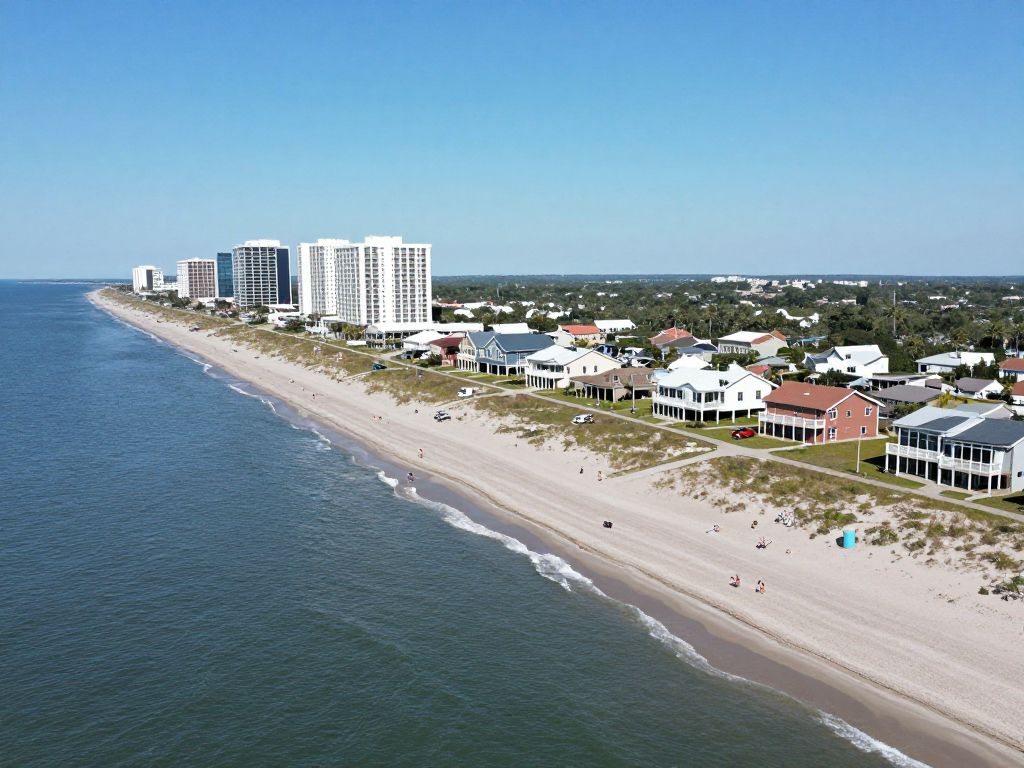
Myrtle Beach, a vibrant jewel in South Carolina’s Grand Strand region, continues to face the complex and enduring challenges posed by its dynamic coastal environment and sustained population growth. The region, highly desirable for both residents and visitors along the Atlantic Coast, exemplifies a continuous effort to balance development with the profound implications of climate change, notably sea-level rise. This persistent interplay between natural forces and human aspirations shapes the daily reality for communities spanning Horry County and North Myrtle Beach, reflecting a statewide focus on the appropriate use, development, and conservation of irreplaceable coastal resources.
The Persistent Tide of Sea-Level Rise and Development Pressures
The low-lying topography of Myrtle Beach and surrounding areas renders them particularly susceptible to the effects of extreme sea-level rise, a challenge that demands ongoing adaptation strategies. These strategies often include proactive measures such as beach nourishment, the dredging of inlets to maintain navigability, and enhancements to drainage systems. Such efforts are not isolated events but are part of a continuous engagement with an evolving coastline. The U.S. Census Bureau indicates a significant concentration of growth along the South Carolina coast, with Myrtle Beach, Hilton Head, and other areas experiencing considerable expansion. This demographic shift intensifies the need for thoughtful coastal management, as more people and infrastructure become exposed to environmental changes.
Managing the Coastal Ecosystem: From Pests to Plant Life
The unique coastal climate of Myrtle Beach, characterized by warm temperatures and humidity, creates conditions where various pests, including ants, termites, mosquitoes, cockroaches, and rodents, thrive. Consequently, comprehensive pest management solutions are a continuous necessity for property owners and community managers alike. Beyond pest control, the region’s plant life also presents distinct challenges; mastering shrub care in Myrtle Beach’s “unforgiving climate” requires specific strategies to protect plants from coastal crosswinds and other environmental stressors. These seemingly smaller battles for environmental stability are integral to the broader resilience of the coastal community, demanding consistent attention from both residents and specialized services.
Collaborative Efforts in Coastal Resilience
The South Carolina Department of Environmental Services, through its Bureau of Coastal Management (BCM), plays a crucial role in ensuring the sustainable use, development, and conservation of the state’s coastal resources. This state-level commitment extends to fostering partnerships aimed at enhancing coastal resilience. For instance, the Waccamaw Council of Governments, in collaboration with The Nature Conservancy (TNC) and other partners, has joined forces with Horry County and the City of North Myrtle Beach to address resilience challenges along the North Coast. These collaborative frameworks are vital, recognizing that the well-being of coastal communities is a shared responsibility, demanding coordinated efforts across governmental agencies, local municipalities, and environmental organizations to mitigate risks and foster long-term sustainability. The daily work of monitoring tides, managing erosion, and planning for future development reflects an ongoing commitment to preserve the delicate balance between human habitation and the natural world, a task that never truly concludes but rather evolves with each passing season.
*
Frequently Asked Questions
What are the primary climate challenges facing Myrtle Beach?
Myrtle Beach faces significant challenges from its dynamic coastal environment and the effects of climate change, particularly extreme sea-level rise. The low-lying topography makes the area especially susceptible to these impacts.
How does coastal development impact Myrtle Beach?
Myrtle Beach is one of the most desirable places to live and visit on the Atlantic Coast, and a significant percentage of South Carolina’s growth is concentrated along the coast, particularly in the Myrtle Beach, Hilton Head, and surrounding areas. This growth necessitates ongoing efforts to balance development with environmental preservation, demanding careful management of coastal resources.
What measures are being taken to address sea-level rise in Myrtle Beach?
Adaptation options for coastal resort cities like Myrtle Beach include measures such as beach nourishment, inlet dredging, and improvements to drainage systems to combat the effects of extreme sea-level rise.
What role does the South Carolina Department of Environmental Services play in coastal management?
The South Carolina Department of Environmental Services (SCDES), through its Bureau of Coastal Management (BCM), helps ensure the appropriate use, development, and conservation of South Carolina’s irreplaceable coastal resources.
Are there specific pest control challenges in Myrtle Beach?
Yes, Myrtle Beach’s coastal climate creates perfect conditions for pests such as ants, termites, mosquitoes, cockroaches, and rodents to thrive, making comprehensive pest management solutions tailored to the coastal environment a necessity.
How are local entities collaborating on coastal resilience?
Horry County, the City of North Myrtle Beach, and the Waccamaw Council of Governments have partnered with The Nature Conservancy (TNC) and other organizations to address coastal resilience challenges along the North Coast.
*
***
Key Features of Myrtle Beach’s Coastal Challenges
| Feature | Description | Scope |
|---|---|---|
| Coastal Desirability | Myrtle Beach is a highly desirable place to live and visit on the Atlantic Coast, serving as the crown jewel of South Carolina’s Grand Strand. | State-level |
| Population Growth | A significant percentage of South Carolina’s growth is concentrated along the coast, particularly in Myrtle Beach, Hilton Head, and surrounding areas. | State-level |
| Climate Challenge | The region faces extreme sea-level rise and other climate challenges, impacting its low-lying topography. | Local |
| Adaptation Options | Measures like beach nourishment, inlet dredging, and drainage improvements are crucial for adapting to climate change. | Local |
| Pest Control Issues | The coastal climate creates perfect conditions for various pests (ants, termites, mosquitoes, cockroaches, rodents) to thrive. | Local |
| Shrub Care Complexity | Protecting plants from coastal challenges like crosswinds requires specialized shrub care. | Local |
| Coastal Management Authority | The Bureau of Coastal Management (BCM) ensures appropriate use, development, and conservation of coastal resources. | State-level |
| Collaborative Resilience Efforts | Local governments and organizations (e.g., Horry County, North Myrtle Beach, Waccamaw COG, TNC) collaborate on coastal resilience initiatives. | Local |
Deeper Dive: News & Info About This Topic
HERE Resources
Horry County Schools Navigate Enrollment Shifts
Myrtle Beach High Faces Athletic Eligibility Fine
Conway Chapter Marks Half a Century of Community Engagement
Navigating the AI Tide for Myrtle Beach Small Businesses
Myrtle Beach: A Golf Lover’s Affordable Winter Getaway
Myrtle Beach Students Prepare for Golf Tournament
Coastal Carolina Women’s Basketball Launches 2026 Schedule
Chanticleers Fall in Overtime Thriller
South Carolina Prioritizes Crime Legislation in New Session
Myrtle Beach Welcomes New Mayoral Leadership

Author: STAFF HERE MYRTLE BEACH
The HERE Myrtle Beach Staff Writers are a collaborative team of journalists, editors, and local contributors passionate about delivering accurate, timely information to the Myrtle Beach community. As part of the HEREcity.com Network, which powers over 100 U.S. city sites including HEREcolumbia.com, our staff draws on collective experience in South Carolina journalism to cover everything from business sales and real estate developments to dining deals and community initiatives. Our Expertise and Background Local Roots in Myrtle Beach Our team includes lifelong Myrtle Beach residents and SC natives with deep knowledge of the area’s history, economy, and culture. We’ve covered key events like the recent developments along the Grand Strand, Myrtle Beach’s tourism and hospitality industry, and growth in local education sectors (e.g., Coastal Carolina University programs). Collective Experience With over 50 combined years in journalism, our staff has backgrounds in print, digital media, and community reporting. We prioritize fact-based stories, drawing from sources like the Myrtle Beach Area Chamber of Commerce, city government records, and on-the-ground interviews. Commitment to Quality Every article is a group effort, involving research, editing, and verification to ensure reliability. We adhere to journalistic standards, citing credible sources and updating content as new details emerge.