
SC Supreme Court Examines Constitutionality of Firing Squad, Electric Chair as Death Penalty Methods
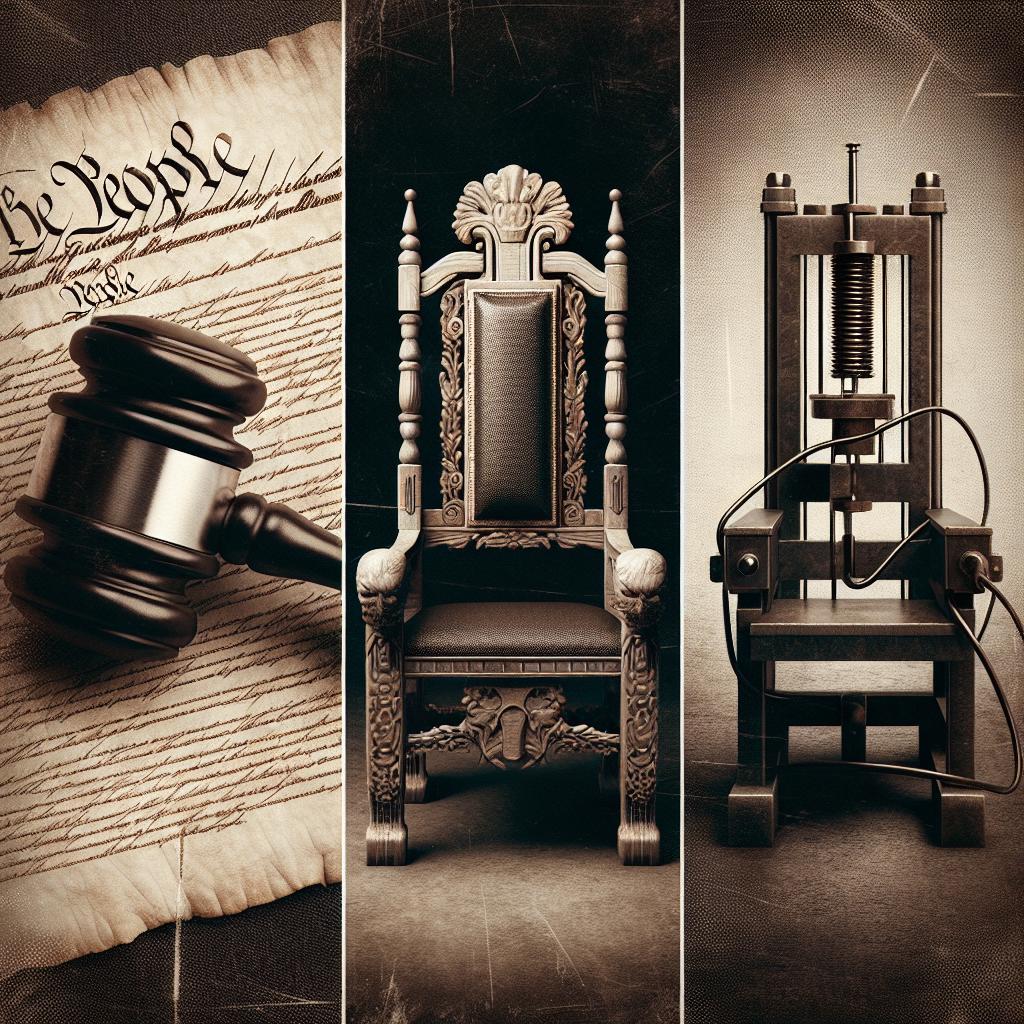
The South Carolina Supreme Court heard arguments on February 6 over the constitutionality of the firing squad and electric chair as methods for the death penalty. During the hearing, some justices indicated discomfort, especially with the use of the firing squad.
Case Background
Four death row inmates, all convicted murderers, are currently suing the South Carolina Department of Corrections. They argue that the electric chair violates the state constitution’s prohibition of cruel punishment and that the firing squad infringes on the prohibitions against unusual or corporal punishment.
At present, there are 32 men on death row in South Carolina, according to the corrections department. Although South Carolina now possesses the drugs necessary for a lethal injection execution, the dispute over the other two methods originates from a 12-year period following 2011 when the state was unable to acquire the essential drugs. This shortage created a de facto moratorium.
Changing Execution Methods
Since 1995, the state’s default method of execution had been lethal injection, although inmates could choose electrocution. However, in 2021, the governor signed a bill that made electrocution the default method but offered inmates the choice of a firing squad or lethal injection if the drugs were available.
Circuit Court Decision
The inmates took legal action, claiming that without the availability of lethal injection drugs, they would be forced to opt between two unconstitutional methods of execution. At a trial in Columbia in September 2022, Circuit Court Judge Jocelyn Newman concurred with the inmates and ruled that the electric chair and firing squad were unconstitutional. The state subsequently appealed.
Recent Legal Developments
In May 2023, Gov. Henry McMaster signed the Shield Law, which forbade the release of any information that would reveal the identities of the companies from which the state purchased lethal injection drugs. In September, McMaster announced that the state had acquired pentobarbital, a lethal injection drug, and was prepared to resume executing inmates whose appeals had been exhausted.
Latest Hearings
With the availability of lethal injection now an option, the state Supreme Court resumed examining the question of the constitutionality of the electric chair and firing squad on February 6. Lawyers representing both the state and the inmates presented their arguments.
State’s Argument
The state’s attorney, Grayson Lambert, pointed to the availability of lethal injection as an “off-ramp” that could allow the Court to avoid making a judgement on the constitutionality of the electric chair and the firing squad. He suggested that the inmates now have the choice of lethal injection, agreed by their lawyers to be constitutional.
Inmates’ Argument
In contrast, John Blume, a representative from the Cornell Death Penalty Project representing the inmates, responded that individuals should not be able to elect an unconstitutional method. He also asked the court to order the Department of Corrections to provide more information about the lethal injection drugs to the courts and the inmates.
The South Carolina Supreme Court did not sidestep the constitutional question, allowing discussions on both executions methods. A decision is expected at a later date.


Author: STAFF HERE MYRTLE BEACH
The HERE Myrtle Beach Staff Writers are a collaborative team of journalists, editors, and local contributors passionate about delivering accurate, timely information to the Myrtle Beach community. As part of the HEREcity.com Network, which powers over 100 U.S. city sites including HEREcolumbia.com, our staff draws on collective experience in South Carolina journalism to cover everything from business sales and real estate developments to dining deals and community initiatives. Our Expertise and Background Local Roots in Myrtle Beach Our team includes lifelong Myrtle Beach residents and SC natives with deep knowledge of the area’s history, economy, and culture. We’ve covered key events like the recent developments along the Grand Strand, Myrtle Beach’s tourism and hospitality industry, and growth in local education sectors (e.g., Coastal Carolina University programs). Collective Experience With over 50 combined years in journalism, our staff has backgrounds in print, digital media, and community reporting. We prioritize fact-based stories, drawing from sources like the Myrtle Beach Area Chamber of Commerce, city government records, and on-the-ground interviews. Commitment to Quality Every article is a group effort, involving research, editing, and verification to ensure reliability. We adhere to journalistic standards, citing credible sources and updating content as new details emerge.