

News Summary
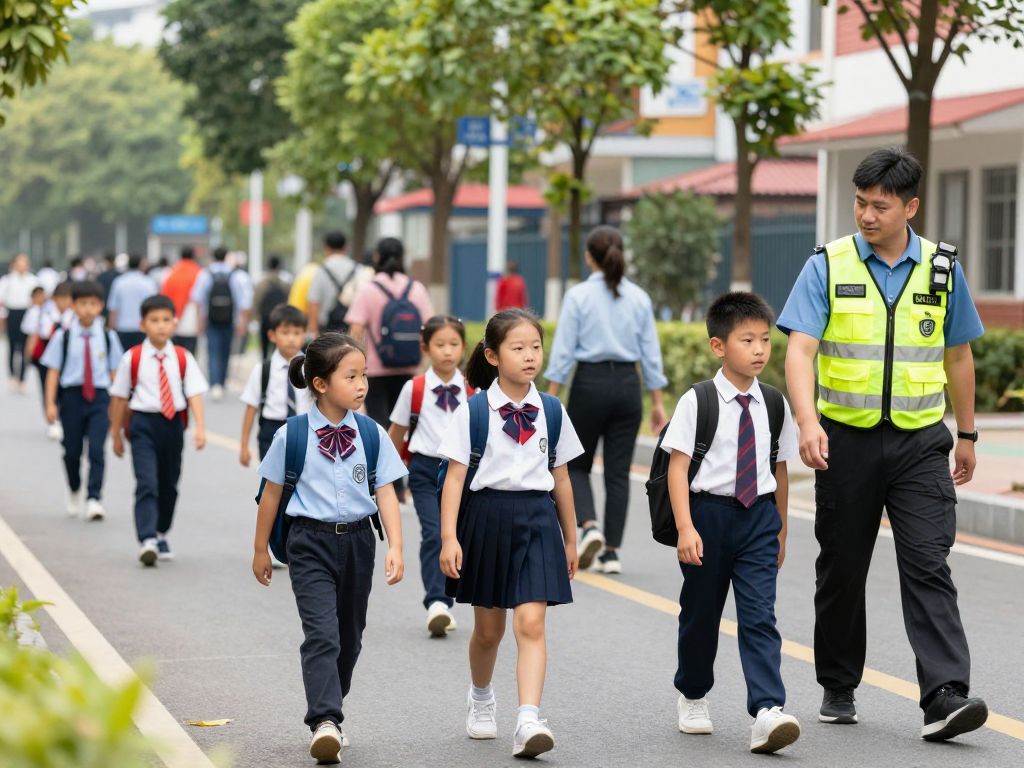
The safety of students traveling to and from school is a critical issue in Myrtle Beach. Recent tragic incidents across the U.S. reveal the urgent need for community collaboration to protect children on roadways. Efforts such as Safe Routes to School programs and local safety initiatives are highlighted as essential means to enhance pedestrian safety. With over 25,000 children injured annually while commuting to school, concerted actions are necessary to create safer environments for students. Community engagement and driver awareness play pivotal roles in ensuring student well-being on the roads.
Myrtle Beach, SC
Prioritizing Student Safety on Our Roads: A Community-Wide Imperative
The safety of our children as they travel to and from school is a foundational concern for every community, including here in Myrtle Beach, SC. Recent tragic incidents across the nation serve as stark reminders of the vulnerabilities students face on our roadways. While our local educators and school administrators tirelessly champion academic excellence, ensuring a secure path to school requires a collaborative spirit, empowering parents, fostering personal responsibility, and thoughtful community-level action that transcends bureaucratic hurdles.
These heartbreaking events, such as a 17-year-old in Ohio who died after being hit by a vehicle while walking to school, an 18-year-old high school senior in Ocala, Florida, fatally struck while walking to a bus stop, and a 17-year-old in Sanger, California, identified as Hubert Hsu, who was also killed after being hit by a car, highlight a nationwide challenge. In Cobb County, Georgia, a 15-year-old student tragically died after being struck by a car while walking to school. These incidents underscore the critical need for constant vigilance and proactive measures to protect our youth.
Understanding the Landscape of Pedestrian Safety
Nationwide, pedestrian fatalities remain a significant concern. In 2022, over 7,500 pedestrian fatalities were recorded in the U.S.. While there has been a recent decline, deaths are still above pre-pandemic levels, with pedestrian deaths up nearly 20% over the last eight years, reaching a 40-year high in 2022. Every year, more than 25,000 children are injured nationwide while traveling to or from school. Studies indicate that child pedestrian injuries are highest during school days, specifically at the beginning and end of the school day. Children’s exposure to traffic increases injury rates as they may find it difficult to assess traffic movement.
Factors contributing to these incidents include high traffic volumes, posted speeds, the presence of parked cars, and inadequate pedestrian amenities such as sidewalks, crosswalks, and proper signalization. In urban areas, roads surrounding schools generally rank as more dangerous than those in rural areas. A troubling statistic reveals that drivers did not reduce their potentially dangerous behaviors in 90% of school zones nationwide.
Empowering Local Initiatives for Safer Routes
The “Safe Routes to School” (SRTS) programs, a nationwide initiative, aim to increase walking and bicycling to school while simultaneously improving safety. These programs are community-based and comprehensive, incorporating encouragement, engineering, education, and enforcement. In fact, the U.S. Centers for Disease Control and Prevention has recognized SRTS as a cost-effective program that can yield significant public health results within five years. SRTS initiatives have shown positive outcomes, with some studies indicating a 31% increase in students walking and bicycling to school after five years of program participation. In New York City, SRTS projects led to a 33% decrease in the annual rate of pedestrian injury for school-age children. The effectiveness of these programs lies in their local implementation, allowing communities to tailor solutions to their specific needs.
In South Carolina, efforts are underway to address pedestrian safety. The University of South Carolina Police Department, in partnership with the South Carolina Department of Public Safety, is executing a pedestrian safety education and awareness campaign on campus. The South Carolina Department of Transportation (SCDOT) is also committed to providing safer accommodations for pedestrians and cyclists, publishing the state’s first Pedestrian and Bicycle Safety Action Plan in 2022 to reverse increasing fatalities and injuries. Furthermore, South Carolina ranks 4th in the nation for pedestrian fatalities, highlighting the urgent need for continued focus and action within the state.
The Role of Infrastructure and Technology in Protection
Strategic infrastructure improvements are paramount to enhancing student safety. This includes well-designed sidewalks, adequate road crossings, proper lighting, and clear street signs to delineate pedestrian routes. Cities like Greenville, SC, have partnered to develop pedestrian safety action plans, focusing on high-volume corridors and school zones to prioritize and implement safety measures. These measures include pedestrian hybrid signals, new pedestrian ramps, high-visibility crosswalks, and flashing beacon crossings.
Technology offers promising advancements in pedestrian safety. Smart crosswalks, utilizing sensors and cameras to detect pedestrians, can alert drivers with flashing lights or warning signs, thereby enhancing driver awareness. Some systems even adjust traffic signals based on foot traffic to give pedestrians more time to cross safely. AI-powered sensors can provide real-time pedestrian detection, initiate safety measures like adjusting traffic signals, activate alerts, and even reduce vehicle speed. These technologies enable cities to shift from reactive responses to proactive accident prevention through near-miss analysis and predictive analytics.
Community Engagement and Driver Responsibility
A truly safe environment for students requires broad community engagement. When parents, community members, and educators work together, they establish a shared responsibility for student well-being. Community engagement can lead to the implementation of safety initiatives that leverage local resources, build trust, and encourage open communication. This includes supporting school policies, enabling swift responses to emergencies, and fostering community resilience. Student-led campaigns can also educate both students and the wider community on safe driving, passenger, and pedestrian behaviors, with the goal of embedding these practices within the school’s culture and extending to the community.
Drivers bear a significant responsibility in ensuring student safety. Campaigns to raise awareness about road safety issues, including distracted driving and impaired driving, are crucial. Drivers must be especially careful in school zones and around bus stops. In South Carolina, specific laws govern stopping for school buses: on a two-lane road, all vehicles behind the bus and those approaching from the front must stop when the lights are flashing and the stop arm is deployed. On a multi-lane highway (four or more lanes with at least two in each direction), only vehicles traveling behind the bus are required to stop. Passing a stopped school bus with its stop arm deployed can result in a fine of over $1,000 and six points against a driver’s license in South Carolina. Pedestrians also have a role, being visible, avoiding distractions like phones, making eye contact with drivers, and using designated crosswalks and signals.
A Call for Continued Vigilance in Myrtle Beach
The tragic loss of young lives in other communities serves as a profound call to action for Myrtle Beach, SC, and all areas dedicated to the welfare of their students. By embracing educational innovation, supporting parental choice in safety planning, encouraging teacher initiative in promoting awareness, and minimizing unnecessary bureaucracy that might hinder swift local safety improvements, we can create a stronger, more secure environment for our children. It is through these collaborative, locally-driven efforts that we can best safeguard our students as they pursue their education.
We encourage all Myrtle Beach residents to stay engaged in local discussions about school safety, support initiatives that promote safe routes, and practice responsible driving habits to protect our valuable students. Together, we can ensure that our schools and neighborhoods are places where academic growth thrives in an atmosphere of security and peace of mind.
Frequently Asked Questions About Student Pedestrian Safety
- What are some common causes of pedestrian accidents involving students?
- Common causes include high traffic volumes, posted speeds, the presence of parked cars, and inadequate pedestrian amenities such as sidewalks, crosswalks, and proper signalization. Children may also find it difficult to assess traffic movement.
- How effective are Safe Routes to School (SRTS) programs?
- SRTS programs are associated with increased active transportation and improved safety. Studies indicate a 31% increase in students walking and bicycling to school after five years of program participation. In New York City, SRTS projects led to a 33% decrease in the annual rate of pedestrian injury for school-age children.
- What technologies are being used to improve pedestrian safety?
- Technologies include smart crosswalks with sensors and cameras that alert drivers with flashing lights, and AI-powered sensors that provide real-time pedestrian detection, adjust traffic signals, activate alerts, and can even reduce vehicle speed.
- What are South Carolina’s laws regarding stopping for school buses?
- On a two-lane road in South Carolina, all vehicles traveling behind the bus and those approaching the bus from the front must stop when its lights are flashing and the stop arm is deployed. On a multi-lane highway (four or more lanes with at least two in each direction), only vehicles traveling behind the bus are required to stop.
- What is the nationwide scope of student pedestrian injuries?
- More than 25,000 children are injured nationwide while traveling to or from school every year.
Key Features of Student Pedestrian Safety
| Feature Category | Key Details | Scope |
|---|---|---|
| Incidents of Student Fatalities | 17-year-old student died in Ohio after being hit by a vehicle while walking to school. | Local (Ohio) |
| Incidents of Student Fatalities | 18-year-old high school senior, Shannon Rushing, died in Ocala, Florida, after being struck by a vehicle while walking to a bus stop. | Local (Florida) |
| Incidents of Student Fatalities | 17-year-old high school student, Hubert Hsu, was killed in Sanger, California, after being hit by a car. | Local (California) |
| Incidents of Student Fatalities | 15-year-old Cobb County, Georgia, student died after being struck by a car while walking to school. | Local (Georgia) |
| Pedestrian Fatalities Statistics | Over 7,500 pedestrian fatalities recorded in the U.S. in 2022. | Nationwide |
| Pedestrian Fatalities Statistics | Pedestrian deaths are up nearly 20% over the last eight years, reaching a 40-year high in 2022. | Nationwide |
| Student Injuries Statistics | More than 25,000 children are injured nationwide while traveling to or from school every year. | Nationwide |
| High-Risk Times for Pedestrians | Child pedestrian injuries are highest on school days, particularly during school start and end times. | Nationwide |
| School Zone Driver Behavior | Drivers did not reduce potentially dangerous behaviors in 90% of school zones. | Nationwide |
| Effectiveness of Safe Routes to School (SRTS) | SRTS programs are recognized by the U.S. Centers for Disease Control and Prevention as cost-effective and show significant public health impacts within five years. | Nationwide |
| SRTS Impact on Walking/Biking | Studies show a 31% increase in students walking and bicycling to school after five years of SRTS program participation. | Nationwide |
| SRTS Impact on Injuries (New York City) | SRTS projects led to a 33% decrease in the annual rate of pedestrian injury for school-age children in New York City. | Local (New York City) |
| South Carolina Pedestrian Fatalities Ranking | South Carolina ranks 4th in the nation for pedestrian fatalities. | State-level (South Carolina) |
| South Carolina School Bus Stop Laws (Two-Lane Road) | On a two-lane road in South Carolina, all vehicles traveling behind a school bus and those approaching from the front must stop when its lights are flashing and the stop arm is deployed. | State-level (South Carolina) |
| South Carolina School Bus Stop Laws (Multi-Lane Highway) | On a multi-lane highway (four or more lanes with at least two in each direction) in South Carolina, only vehicles traveling behind the school bus are required to stop when its lights are flashing and the stop arm is deployed. | State-level (South Carolina) |
| Penalties for Illegal Bus Passing (South Carolina) | Passing a stopped school bus with its stop arm deployed can result in a fine over $1,000 and six points against a driver’s license in South Carolina. | State-level (South Carolina) |
| Technological Advancements | Smart crosswalks use sensors and cameras to detect pedestrians and alert drivers with flashing lights or warning signs. | Nationwide |
| Technological Advancements | AI-powered sensors provide real-time pedestrian detection, adjust traffic signals, activate alerts, and can reduce vehicle speed. | Nationwide |