

Supreme Court Places Florida and Texas Laws on Hold Hampering Social Media Platforms’ User Content Control
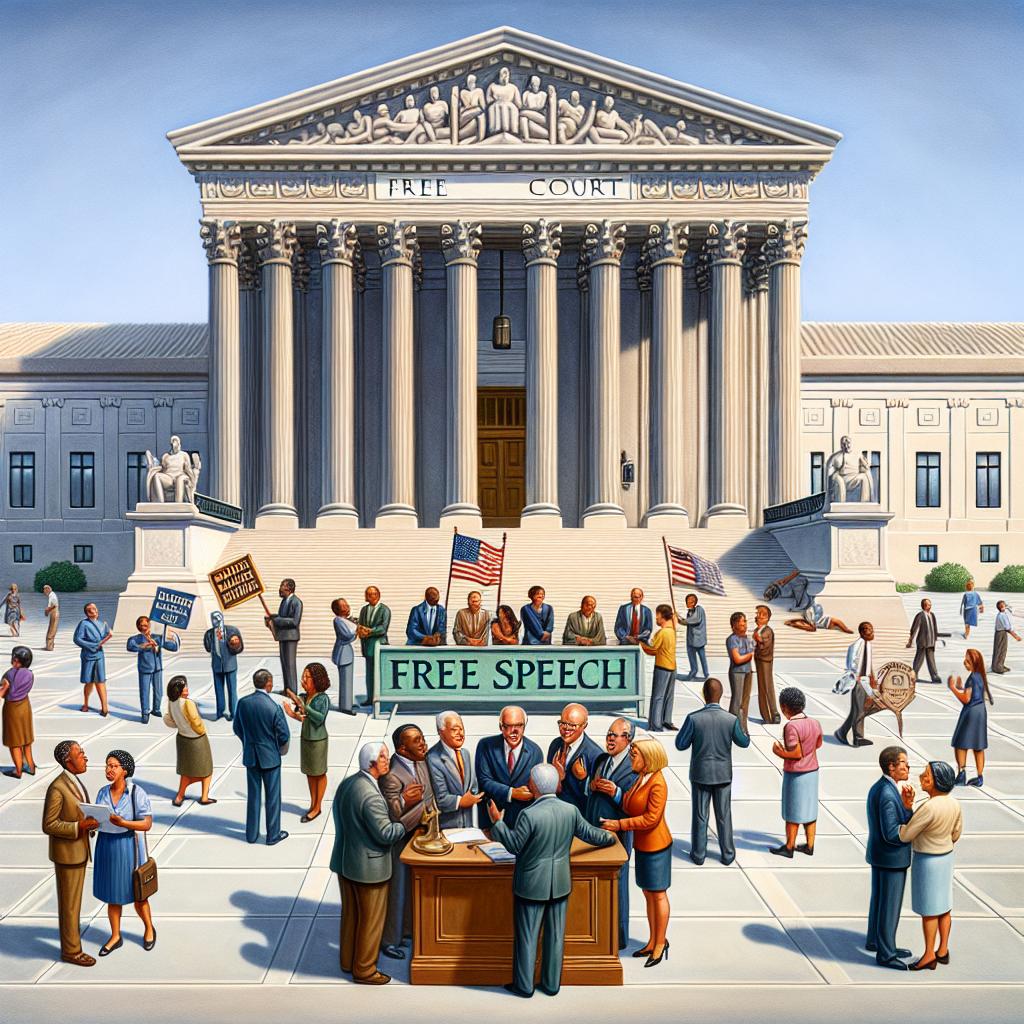
In a standout decision, the United States Supreme Court has temporarily halted the efforts of Florida and Texas to impose limitations on major social media platforms including Facebook, TikTok, X, and YouTube. These restrictions would impact how these platforms administer content posted by their users. The Supreme Court ruling robustly defended the free speech rights of these platforms.
Free Speech Rights Protected
Justice Elena Kagan spoke for the court, asserting the rights of these platforms to be safeguarded from governmental interference in deciding what content to feature or disallow on their platforms. Analogous to newspapers, these social media platforms are entitled to maintain their rights over their virtual space. “The principle does not change because the curated compilation has gone from the physical to the virtual world,” Kagan appended. This opinion was signed by five justices, with all nine justices supporting the overall ruling.
Returned to Lower Courts
The cases have now been referred back to the lower courts for further scrutiny. These challenges have been raised by trade associations representing these companies. Both Texas and Florida laws were designed based on long-standing concerns from conservatives that these social media platforms exhibit a liberal bias and engage in censorship based on users’ viewpoints, particularly those on the political right.
From Florida and Texas to Supreme Court
Florida and Texas laws were put forward by the respective states’ Republican governors following the decisions made by Facebook and Twitter, now identified as X, to exclude then-President Donald Trump from the platforms due to his posts related to the attack on the U.S. Capitol by his supporters on January 6, 2021. Trade associations stepped forward to challenge these laws, contending that they violate the speech rights of the platforms. This resulted in a federal appeals court striking down Florida’s statute while upholding Texas’s law. Both were placed on hold pending the Supreme Court’s decision.
Tensions Rising
Although the platform’s decisions had already stirred up much controversy, a significant change occurred when Elon Musk acquired Twitter. After purchasing the platform, he not only renamed it but also disbanded the teams focusing on content moderation. He not only allowed many previously banned users to re-join the platform but used it to circulate unproved theories.
Opinions and Reactions
Free speech advocates hailed these rulings as victories, stating that the government has no right to control social media in an attempt to implement its vision of online speech. They consider this judgement as crucial in preserving the right to free speech and access to information on the internet. However, the rulings also marked a “bumpy win” as the justices appeared “frustrated” that the cases were presented as facial challenges, leading to both cases being vacated and sent back for further development.
Future of Social Media Regulations
The justices expressed concerns about a broad ruling that might impact businesses not primarily targeted by these laws, including e-commerce sites like Uber and Etsy, and email and messaging services. However, they seemed intent on avoiding the laws taking effect, putting forth the view of these platforms as more akin to newspapers with free-speech protections rather than telephone companies susceptible to broader regulation.


Author: STAFF HERE MYRTLE BEACH
The HERE Myrtle Beach Staff Writers are a collaborative team of journalists, editors, and local contributors passionate about delivering accurate, timely information to the Myrtle Beach community. As part of the HEREcity.com Network, which powers over 100 U.S. city sites including HEREcolumbia.com, our staff draws on collective experience in South Carolina journalism to cover everything from business sales and real estate developments to dining deals and community initiatives. Our Expertise and Background Local Roots in Myrtle Beach Our team includes lifelong Myrtle Beach residents and SC natives with deep knowledge of the area’s history, economy, and culture. We’ve covered key events like the recent developments along the Grand Strand, Myrtle Beach’s tourism and hospitality industry, and growth in local education sectors (e.g., Coastal Carolina University programs). Collective Experience With over 50 combined years in journalism, our staff has backgrounds in print, digital media, and community reporting. We prioritize fact-based stories, drawing from sources like the Myrtle Beach Area Chamber of Commerce, city government records, and on-the-ground interviews. Commitment to Quality Every article is a group effort, involving research, editing, and verification to ensure reliability. We adhere to journalistic standards, citing credible sources and updating content as new details emerge.