

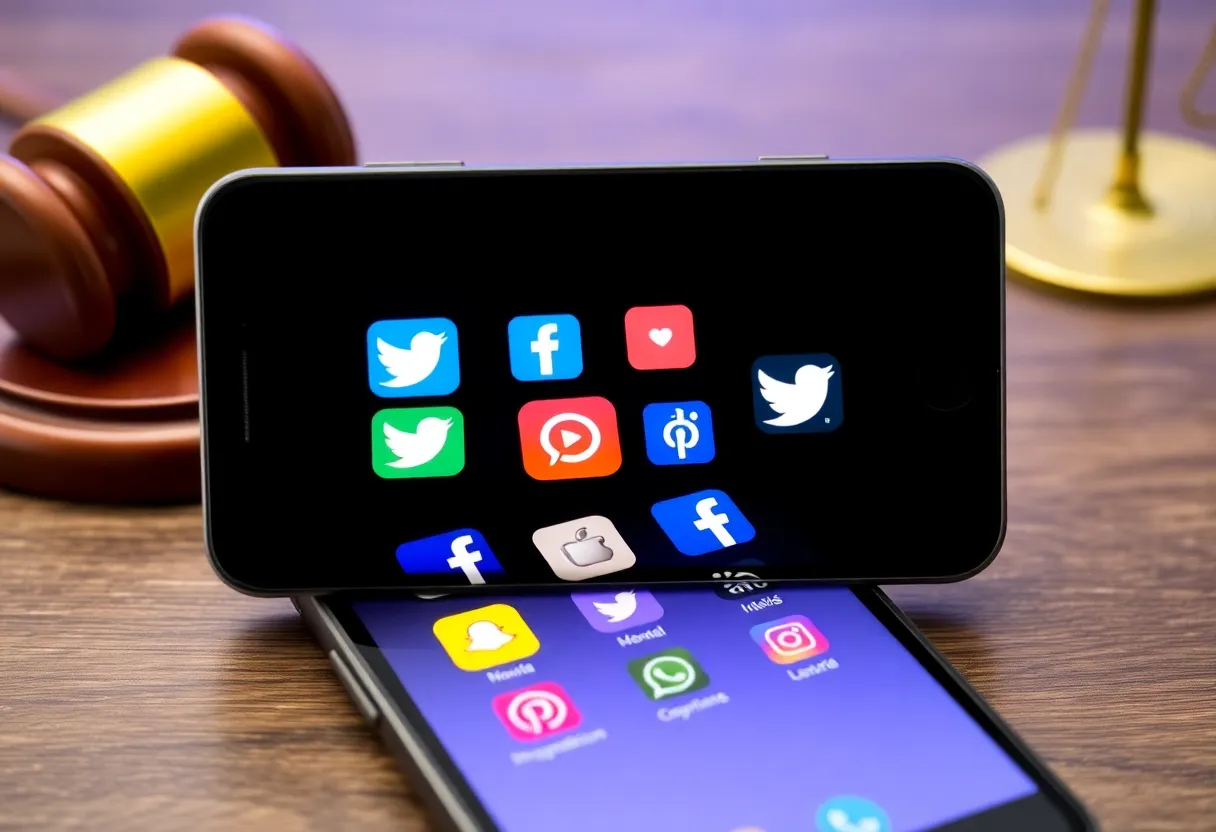
News Summary
The Supreme Court is deliberating a law that could ban TikTok due to national security fears regarding its Chinese ownership. With 170 million users in the U.S., the stakes are high as the court weighs First Amendment rights against data privacy and national interests. Solicitor General argues potential risks from data sharing, while TikTok fights to maintain its platform’s integrity. The outcome could result in TikTok’s removal from app stores, affecting millions. The urgency escalates as the proposed law is set to take effect soon.
Supreme Court Weighs TikTok’s Future Amid National Security Questions
On January 10th, the Supreme Court of the United States held a critical session regarding a law that could potentially result in a ban of the popular app TikTok. The proposed legislation could force TikTok’s parent company, ByteDance, a Chinese firm, to divest from the app within the American market. Should the law not face any obstacles, it is set to go into effect on January 19th, ramping up the urgency of the court’s deliberations.
TikTok in the Crosshairs
With a whopping 170 million users across the United States, TikTok has become a cultural phenomenon, especially among younger generations. However, its ownership by a Chinese company has raised eyebrows in Washington, leading to mounting national security concerns. Chief Justice John Roberts openly questioned whether ByteDance might be leveraging TikTok to create division among Americans, a sentiment that many justices echoed during the nearly two-and-a-half-hour long session.
A Battle Over Free Speech?
The court appeared skeptical of TikTok’s claims centered around the First Amendment. Solicitor General Elizabeth Prelogar, advocating for the ban, underscored the potential risks linked to personal data that TikTok shares with its Chinese parent company. The government argues that this situation creates a “gaping vulnerability” that could lead to espionage or blackmail.
Justice Brett Kavanaugh raised valid points about the real dangers of China utilizing TikTok data for nefarious purposes, indicating a concerning blend of technology and national security tensions. On the flip side, TikTok’s legal representation stressed that the law threatens the very integrity of the platform, risking its viability by rendering it effectively “dark” should a total ban come to pass.
The Complexity of Enforcement
The justices dug into deeper questions surrounding the law’s implications, particularly if the government could enforce a ban against a foreign-owned entity like TikTok. Justice Neil Gorsuch shared skepticism regarding the government’s rationale for the law, while other justices, including Samuel Alito, suggested exploring more moderate solutions. Instead of a complete shutdown, alternatives to allow the app to function while addressing the security issues could be on the table.
A Crossroads for TikTok and National Interest
As discussions continued, the clash between TikTok’s rights as a platform and the government’s responsibility for national security became increasingly apparent. TikTok’s team argued that less drastic measures could address the core concerns without necessitating a complete ban. Meanwhile, the Biden administration has voiced its eagerness for an expedited resolution to clarify TikTok’s status as the deadline draws nearer.
Possible Implications of the Court’s Decision
If this law indeed goes into effect, TikTok would become unavailable for download from app stores, creating significant functionality issues for existing users over time due to a lack of updates. The stakes couldn’t be higher—not only for TikTok but also for its vast user base who enjoy sharing and discovering content on the platform.
The ongoing debate has attracted the attention of First Amendment advocates, social justice groups, and even certain lawmakers who urge a careful consideration of the law’s ability to impose restrictions that might infringe on free speech.
Moreover, former President Trump has expressed a desire to see TikTok sustained, adding yet another layer of complexity as the Supreme Court mulls its next move. As deliberations continue and the clock ticks down, the future of TikTok hangs in the balance, spotlighting the difficult intersection of technology, free speech, and national security.
Deeper Dive: News & Info About This Topic
- Reuters
- Wikipedia: TikTok
- USA Today
- Google Search: TikTok ban Supreme Court
- CNN
- Encyclopedia Britannica: TikTok
- The Hill
- Google News: TikTok Supreme Court January 2025

Author: STAFF HERE MYRTLE BEACH
The HERE Myrtle Beach Staff Writers are a collaborative team of journalists, editors, and local contributors passionate about delivering accurate, timely information to the Myrtle Beach community. As part of the HEREcity.com Network, which powers over 100 U.S. city sites including HEREcolumbia.com, our staff draws on collective experience in South Carolina journalism to cover everything from business sales and real estate developments to dining deals and community initiatives. Our Expertise and Background Local Roots in Myrtle Beach Our team includes lifelong Myrtle Beach residents and SC natives with deep knowledge of the area’s history, economy, and culture. We’ve covered key events like the recent developments along the Grand Strand, Myrtle Beach’s tourism and hospitality industry, and growth in local education sectors (e.g., Coastal Carolina University programs). Collective Experience With over 50 combined years in journalism, our staff has backgrounds in print, digital media, and community reporting. We prioritize fact-based stories, drawing from sources like the Myrtle Beach Area Chamber of Commerce, city government records, and on-the-ground interviews. Commitment to Quality Every article is a group effort, involving research, editing, and verification to ensure reliability. We adhere to journalistic standards, citing credible sources and updating content as new details emerge.