

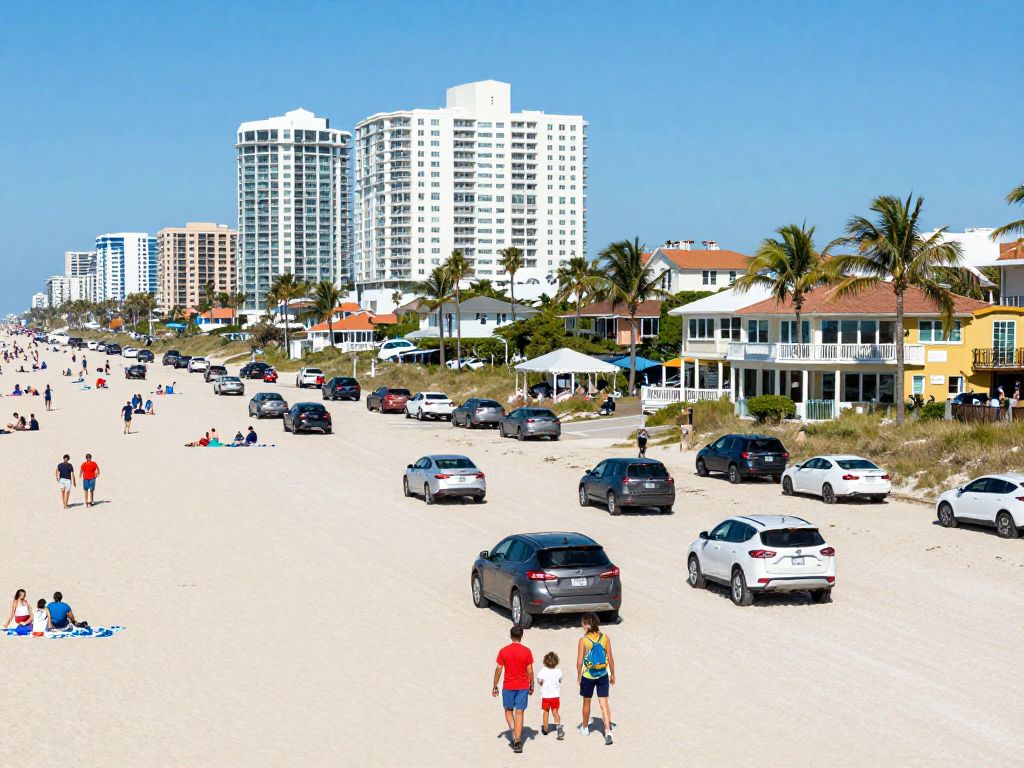
Surfside Beach, SC, January 17, 2026
The Surfside Beach town council is currently reviewing its parking policy to strike a balance between visitor accommodation, local business support, and resident convenience. Recent discussions reflect the town’s commitment to adaptive governance, ensuring effective parking regulations that cater to both tourism and local economic development. Key features of the existing policy include paid parking from March to October and various rates for premium and non-premium lots, which are under consideration for revisions to better serve the community.
WHAT’S HAPPENING
What is the Surfside Beach Council currently discussing regarding parking?
The Surfside Beach Council is actively reviewing and revising its parking policy to balance the needs of visitors, local businesses, and residents. They aim to create efficient and fair regulations that support economic vitality and community well-being.
When is paid parking enforced in Surfside Beach?
Paid parking is enforced seasonally from March 1st through October 31st, operating daily from 8:00 a.m. to 6:00 p.m. Parking is free outside these designated hours and during the off-season (November 1st to February 28th).
What are the current parking rates and enforcement methods?
Pay $3 per hour for premium lots ($15 daily maximum) and $2 per hour for non-premium lots ($10 daily maximum). Enforcement primarily uses license plate recognition, though golf carts and low-speed vehicles still require physical decals.
Are there different rules or rates for parking at the Surfside Beach Pier?
Yes, pay $4 per hour for parking at the Surfside Beach Pier, with no daily maximum. Resident parking decals are specifically not valid in this premium lot.
What are the fines for municipal parking violations in Surfside Beach?
Expect a $50 fine for standard municipal parking violations, which increases to $100 if unpaid after 31 days. Safety parking citations carry a higher fine of $200.
Surfside Beach Council Considers Parking Policy Revisions
In a dynamic coastal community like Surfside Beach, striking the right balance between accommodating visitors, supporting local businesses, and ensuring resident convenience is a continuous endeavor. The town council is currently engaged in discussions to revise its parking policy, a critical aspect of managing the flow of tourism and facilitating local commerce. These ongoing deliberations reflect a commitment to thoughtful governance, aiming to foster an environment where both personal achievement and collective prosperity can flourish within the community.
For small businesses and entrepreneurs, clear and equitable regulations are foundational to their success. The town’s approach to parking directly impacts accessibility for customers and the operational efficiency of local enterprises. As Surfside Beach continues to experience growth and welcome new visitors, the proactive review of existing policies underscores the importance of adaptive governance that can respond to evolving community needs and economic landscapes. The current review process is a testament to the town’s dedication to optimizing conditions for a thriving Myrtle Beach SC business environment.
The Evolving Landscape of Coastal Parking
The need for periodic review of parking policies in coastal towns like Surfside Beach is driven by a combination of factors, including seasonal tourism fluctuations, population growth, and the ongoing demand for accessible beach amenities. Thoughtful parking management is not merely about enforcing rules but about creating a system that supports economic vitality while preserving the quality of life for residents. Such considerations are paramount for sustained Myrtle Beach small business growth and overall community well-being.
Recent Deliberations by the Surfside Beach Council
The Surfside Beach town council and its committees have been actively addressing the municipality’s parking regulations. A Parking Committee Meeting convened on Monday, January 12th, 2026, where recommendations were prepared for presentation. Subsequently, the Town Council Meeting on Tuesday, January 13th, 2026, included discussions on these recommendations, signaling an active pursuit of potential adjustments to the current policy framework. These recent meetings highlight the ongoing effort to refine policies that affect both residents and visitors.
Key Features of the Current Parking Policy
The existing parking policy in Surfside Beach, largely shaped by approvals in early 2024, outlines a structure that differentiates between various parking areas and user types. The paid parking season typically runs from March 1st through October 31st, with hours of operation from 8:00 a.m. to 6:00 p.m.. During this period, parking is free before and after these designated hours.
Current rates set premium lots at $3 per hour, with a daily maximum of $15. Non-premium lots are priced at $2 per hour, with a daily maximum of $10. Parking at the Surfside Beach Pier is designated as a premium lot, costing $4 per hour with no daily maximum, and crucially, resident parking decals are not valid in this specific lot. The town also utilizes license plate recognition for most vehicle parking enforcement, moving away from physical decals, though golf carts and low-speed vehicles (LSVs) still require physical decals. Non-resident, non-owner parking passes for the 2025 season had sold out. Additionally, the town levies a fine of $50 for municipal parking violations, which increases to $100 if unpaid after 31 days. Safety parking citations carry a higher fine of $200.
Currently, free seasonal parking is in effect from November 1, 2025, to February 28, 2026. These details form the operational background against which new revisions are being considered, demonstrating how local governance adapts to the demands of tourism and community services.
Supporting Local Enterprise: The Pier Business Perspective
Amidst discussions of parking policy revisions, the interests of local businesses are also being addressed. Specifically, a local pier business has sought compensation from the town, citing lagging surrounding development as a factor. This scenario underscores the intricate relationship between municipal policies, infrastructure development, and the viability of local enterprises. Policies that consider the economic ripple effects on businesses, such as those that contribute to tourism and local employment, are vital for maintaining a robust South Carolina entrepreneurs landscape. It highlights the importance of fostering an environment where entrepreneurs can innovate and contribute to the local economy without undue burdens.
Summary of Current Parking Policy Features
The table below outlines key features of Surfside Beach’s parking policy, which is currently under review for potential revisions.
| Feature | Details | Geographic Scope |
|---|---|---|
| Paid Parking Season | March 1st to October 31st | Surfside Beach |
| Paid Parking Hours | 8:00 a.m. to 6:00 p.m. | Surfside Beach |
| Premium Lots Hourly Rate | $3 per hour | Surfside Beach |
| Premium Lots Daily Max | $15 per day | Surfside Beach |
| Non-Premium Lots Hourly Rate | $2 per hour | Surfside Beach |
| Non-Premium Lots Daily Max | $10 per day | Surfside Beach |
| Pier Parking Hourly Rate | $4 per hour (no daily max) | Surfside Beach |
| Resident Decal Validity (Pier) | Not valid at pier parking lot | Surfside Beach |
| Enforcement Method | License Plate Recognition (most vehicles); Physical decals (golf carts, LSVs) | Surfside Beach |
| Standard Parking Violation Fine | $50 ($100 if unpaid after 31 days) | Surfside Beach |
| Safety Parking Citation Fine | $200 | Surfside Beach |
| Free Seasonal Parking | November 1st to February 28th | Surfside Beach |
Towards a Balanced Future
The ongoing discussions regarding Surfside Beach’s parking policy reflect a considered approach to local governance. By engaging in a thorough review process, the town council aims to create regulations that are efficient, fair, and conducive to a flourishing local economy. This commitment to balancing the needs of residents, visitors, and business owners is a cornerstone of responsible economic development and contributes to the overall vibrancy of the Grand Strand. Continued dialogue and adaptive policy-making are essential for sustaining a prosperous and welcoming Surfside Beach.
We encourage our readers to stay informed about these developments and to support the local businesses that form the backbone of our community. Their resilience and innovation are key drivers of Midlands economic growth and the unique character of our beloved Myrtle Beach area.
Deeper Dive: News & Info About This Topic
HERE Resources
Heavy Traffic Anticipated on Grand Strand Roads This Weekend
Myrtle Beach City Council Approves $360.7 Million Budget
Surfside Beach and North Myrtle Beach Introduce Free Parking for Residents and Visitors

Author: STAFF HERE MYRTLE BEACH
The HERE Myrtle Beach Staff Writers are a collaborative team of journalists, editors, and local contributors passionate about delivering accurate, timely information to the Myrtle Beach community. As part of the HEREcity.com Network, which powers over 100 U.S. city sites including HEREcolumbia.com, our staff draws on collective experience in South Carolina journalism to cover everything from business sales and real estate developments to dining deals and community initiatives. Our Expertise and Background Local Roots in Myrtle Beach Our team includes lifelong Myrtle Beach residents and SC natives with deep knowledge of the area’s history, economy, and culture. We’ve covered key events like the recent developments along the Grand Strand, Myrtle Beach’s tourism and hospitality industry, and growth in local education sectors (e.g., Coastal Carolina University programs). Collective Experience With over 50 combined years in journalism, our staff has backgrounds in print, digital media, and community reporting. We prioritize fact-based stories, drawing from sources like the Myrtle Beach Area Chamber of Commerce, city government records, and on-the-ground interviews. Commitment to Quality Every article is a group effort, involving research, editing, and verification to ensure reliability. We adhere to journalistic standards, citing credible sources and updating content as new details emerge.