
News Summary
Efforts to preserve Waties Island in South Carolina are advancing, with plans for state park designation and a Heritage Trust Preserve. Spanning over 1,000 acres, the island is a vital coastal ecosystem. The Open Space Institute has collaborated with the Boyce family and local communities to ensure the conservation of its unique wildlife and historical significance. Despite legal challenges, projects continue to receive funding and support, reflecting a commitment to protect this valuable natural resource for future generations.
Waties Island Preservation Efforts Progress Towards State Park Designation in South Carolina
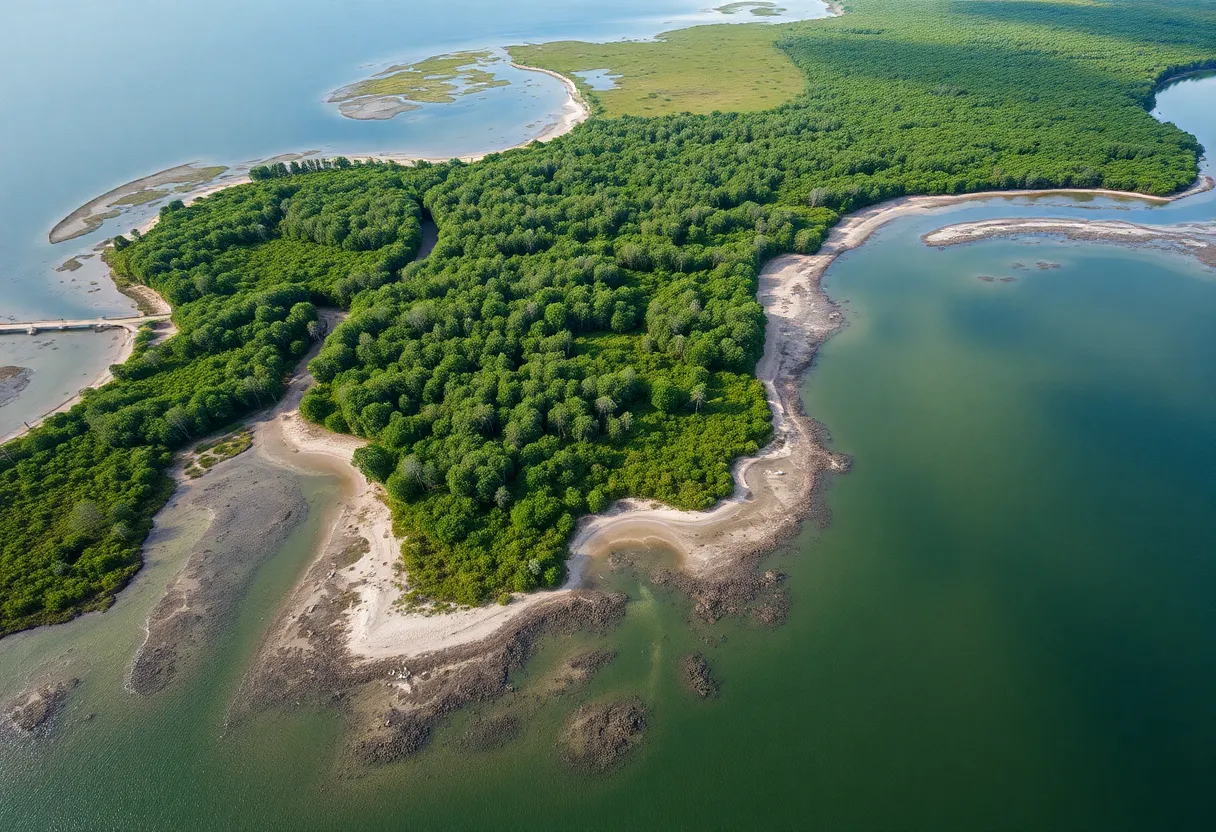
North Myrtle Beach, South Carolina — Efforts to preserve Waties Island, a critical coastal ecosystem, are gaining momentum as parts of the island are set to potentially become a state park and a South Carolina Heritage Trust Preserve. Spanning slightly over 1,000 acres, the island is situated off the northeast coast of South Carolina, offering significant ecological value and historical importance.
The Open Space Institute (OSI) has taken crucial steps in these preservation efforts, acquiring hundreds of acres of Waties Island and collaborating with local communities and state governments. These initiatives aim to maintain the natural state of the island and its ecosystem that supports diverse wildlife, including Seaside sparrows and Loggerhead sea turtles, which nest along its coastal areas.
Efforts to safeguard Waties Island are underscored by the island’s unique geographic features, including salt marshes and a maritime forest that houses a variety of rare plant species. These ecosystems not only support wildlife but also serve as a protective barrier against storm surges, which is particularly relevant given the island’s vulnerability during severe weather events.
Historical Significance and Ownership
Ownership of Waties Island has been held by the Boyce family for generations. They have been staunch advocates for conservation and have prioritized efforts to protect the island’s natural habitats. A historical marker on the island commemorates the effects of Hurricane Hazel in 1954, which illustrates the island’s resilient topography—water levels during the storm reached heights that covered all but the highest point of the barrier island; however, the Boyce family home, located there, sustained no damage.
A causeway connecting Waties Island to the mainland was constructed in the 1960s, facilitating access to the island but also highlighting the need for enhanced conservation efforts. Surrounding the area are remnants from Waccamaw Indian fishing camps, further indicating the island’s long-standing historical significance.
Conservation Challenges and Progress
While preserving Waties Island has gained support, the process has not been without challenges. A lawsuit regarding land ownership temporarily delayed some conservation initiatives but was ultimately resolved favorably for the Boyce family, allowing their preservation efforts to move forward. Funding for these projects has come from various organizations, including Google and local nonprofits, showcasing a collaborative effort to protect the island.
The management plans for Waties Island involve collaboration between the Boyce family, Coastal Carolina University—responsible for research in part of the island—and the South Carolina Department of Natural Resources. This collaboration reflects a commitment to ensure the island remains intact for both ecological study and public enjoyment.
Environmental and Community Impacts
The preservation of Waties Island is seen as crucial for not only environmental conservation but also for safeguarding nearby communities against hurricanes and flooding. The island’s untouched nature offers valuable opportunities for marine research, particularly in understanding the impacts of climate change and the dynamics of coastal ecosystems. Furthermore, the Boyce family reminisces about the island as a cherished family memory and expresses strong aspirations for its conservation for future generations.
As discussions advance regarding the potential state park designation, the interest in maintaining Waties Island as a natural haven for wildlife and a vital resource for the community continues to grow. Preservation efforts are becoming a focal point for local environmental initiatives, aimed at ensuring that the ecological and historical heritage of Waties Island endures.
Deeper Dive: News & Info About This Topic
HERE Resources
South Carolina Invests $12 Million to Preserve Wetlands
Additional Resources
- SC Daily Gazette: SC Agencies Considering 800 Acres in Upcoming Conservation Projects
- Post and Courier: Saving Waties Island is South Carolina Conservation at Its Best
- My Horry News: Waties Island Could Be South Carolina’s Next Natural Heritage Preserve
- Wikipedia: Waties Island
- Encyclopedia Britannica: South Carolina


Author: STAFF HERE MYRTLE BEACH
The HERE Myrtle Beach Staff Writers are a collaborative team of journalists, editors, and local contributors passionate about delivering accurate, timely information to the Myrtle Beach community. As part of the HEREcity.com Network, which powers over 100 U.S. city sites including HEREcolumbia.com, our staff draws on collective experience in South Carolina journalism to cover everything from business sales and real estate developments to dining deals and community initiatives. Our Expertise and Background Local Roots in Myrtle Beach Our team includes lifelong Myrtle Beach residents and SC natives with deep knowledge of the area’s history, economy, and culture. We’ve covered key events like the recent developments along the Grand Strand, Myrtle Beach’s tourism and hospitality industry, and growth in local education sectors (e.g., Coastal Carolina University programs). Collective Experience With over 50 combined years in journalism, our staff has backgrounds in print, digital media, and community reporting. We prioritize fact-based stories, drawing from sources like the Myrtle Beach Area Chamber of Commerce, city government records, and on-the-ground interviews. Commitment to Quality Every article is a group effort, involving research, editing, and verification to ensure reliability. We adhere to journalistic standards, citing credible sources and updating content as new details emerge.