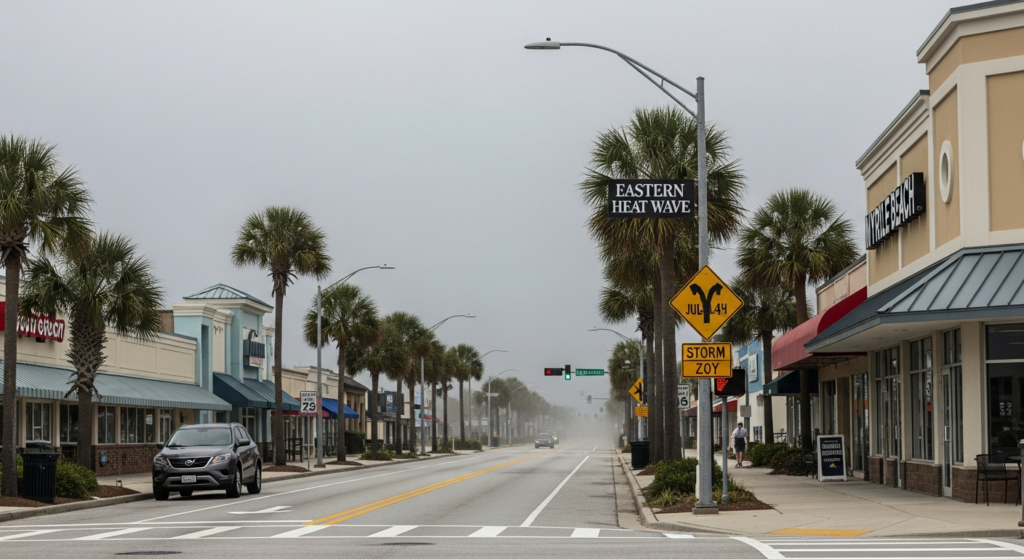
An extensive heat wave impacted the eastern United States over the recent July Fourth holiday weekend, leading to disruptions in planned events and raising concerns about the potential for severe storms and strain on electrical grids. While specific local advisories or event cancellations were not reported for Myrtle Beach, the broader regional conditions underscore vulnerabilities for coastal communities during the peak summer months.
The persistent high temperatures across the East have been identified by national weather services as a significant factor in holiday weekend planning, rather than a typical seasonal background condition. For a city like Myrtle Beach, which relies heavily on its leisure and hospitality industry, such widespread heat can influence visitor comfort and local operations. The city’s primary industry, encompassing hotels, restaurants, and attractions, experiences its highest demand during the summer, making any weather-related disruption a point of attention for local businesses and the seasonal workforce.
Beyond immediate comfort, the heat wave contributes to an environment conducive to more intense weather phenomena. Elevated atmospheric energy, fueled by prolonged heat, can increase the severity of thunderstorms. This raises particular concern for areas like Myrtle Beach, situated along the Atlantic Ocean and traversed by the Intracoastal Waterway, where severe weather can quickly impact both residents and the significant number of tourists present in July. Horry County Government and the City of Myrtle Beach typically coordinate public safety responses, and the potential for rapid weather changes necessitates vigilance.
Another critical concern stemming from the heat wave is the increased demand on electrical infrastructure. Air conditioning usage typically surges during periods of sustained high temperatures, placing additional stress on local power grids. While no specific utility notices were issued for the Myrtle Beach area regarding power strain, the regional trend highlights the importance of resilient infrastructure, especially in a rapidly growing county like Horry County. Major employers such as Grand Strand Regional Medical Center, Conway Medical Center, and McLeod Seacoast, which provide essential healthcare services, depend on consistent power to operate without interruption.
The implications of such a heat wave extend to public health. Prolonged exposure to high temperatures can exacerbate existing health conditions and pose risks to vulnerable populations. Local healthcare providers, including those within the Grand Strand Regional Medical Center network, remain prepared for potential increases in heat-related illnesses during the summer season.
### Why it matters in Myrtle Beach
The recent eastern heat wave, while not leading to specific local advisories or event changes detailed in this reporting, underscores the inherent challenges Myrtle Beach faces as a major summer destination. The city’s reliance on its leisure and hospitality industry means that regional weather patterns directly affect tourism and the local economy. Furthermore, the potential for severe storms and increased strain on the power grid during peak demand periods highlights the ongoing need for robust infrastructure and emergency preparedness, particularly for critical services provided by institutions like Grand Strand Regional Medical Center and the City of Myrtle Beach’s public safety departments.