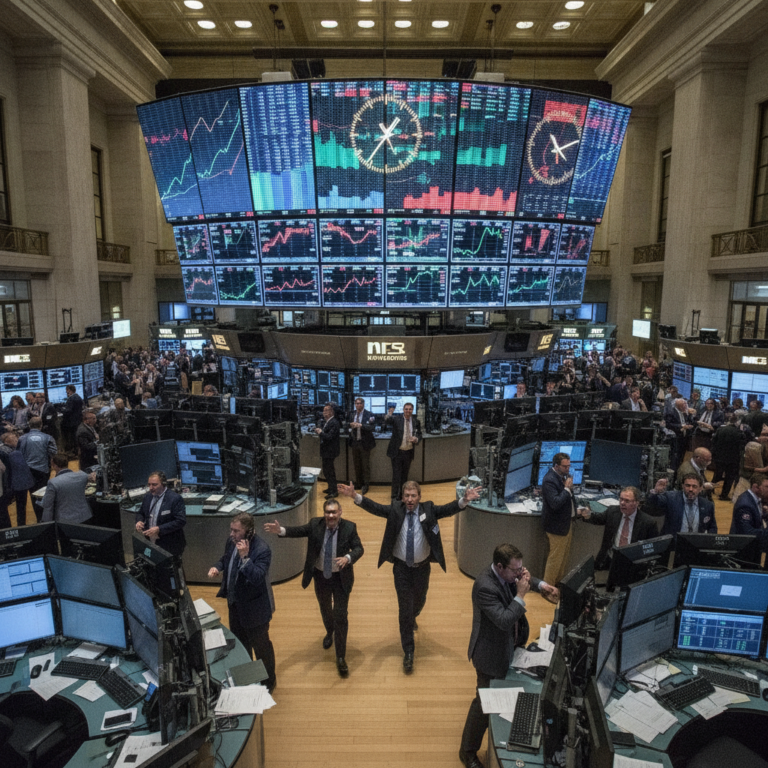
U.S. stock markets closed sharply higher on Monday, August 3, 2026, as investors responded positively to reports of potential de-escalation in U.S.-Iran tensions, which led to a notable drop in oil prices. The Dow Jones Industrial Average surged by 693.38 points, marking a 1.32% increase to close at 53,178.41.
The S&P 500 also experienced a robust session, gaining 110.78 points, or 1.48%, to reach 7,600.50. Technology-heavy Nasdaq Composite led the gains, climbing 540.04 points, a 2.13% rise, to finish the day at 25,913.90.
A key factor in the day’s market performance was the significant decline in crude oil prices, which settled down approximately 5% on August 3, 2026. This drop followed news suggesting planned talks between the United States and Iran, signaling a potential increase in global oil supply or a reduction in geopolitical risk premiums.
Beyond geopolitical developments, corporate earnings continued to provide a strong foundation for the market. Through August 1, 2026, S&P 500 companies reporting their results demonstrated an impressive 29.3% earnings growth. Furthermore, 85.2% of these companies surpassed analyst expectations, indicating a resilient corporate sector.
These national economic indicators contribute to the broader financial climate that influences communities across the country, including Myrtle Beach. The interplay of energy costs and overall market sentiment has indirect but tangible effects on local economies.
Why it matters in Myrtle Beach
National market trends, particularly fluctuations in energy prices, have ripple effects that extend to the local economy of Myrtle Beach. Lower fuel prices, as seen with the recent crude oil drop, can translate into reduced travel costs for visitors, potentially boosting the city’s vital Leisure and Hospitality sector, which is the largest employer in Myrtle Beach. Institutions such as Grand Strand Regional Medical Center, Coastal Carolina University, and the Horry County School District operate within this broader economic environment. Stable or improving national economic conditions can influence everything from state funding for public services to consumer spending that supports local businesses and the overall tax base for the City of Myrtle Beach. This national economic pulse, therefore, contributes to the financial landscape that shapes daily life and long-term planning across the Grand Strand.