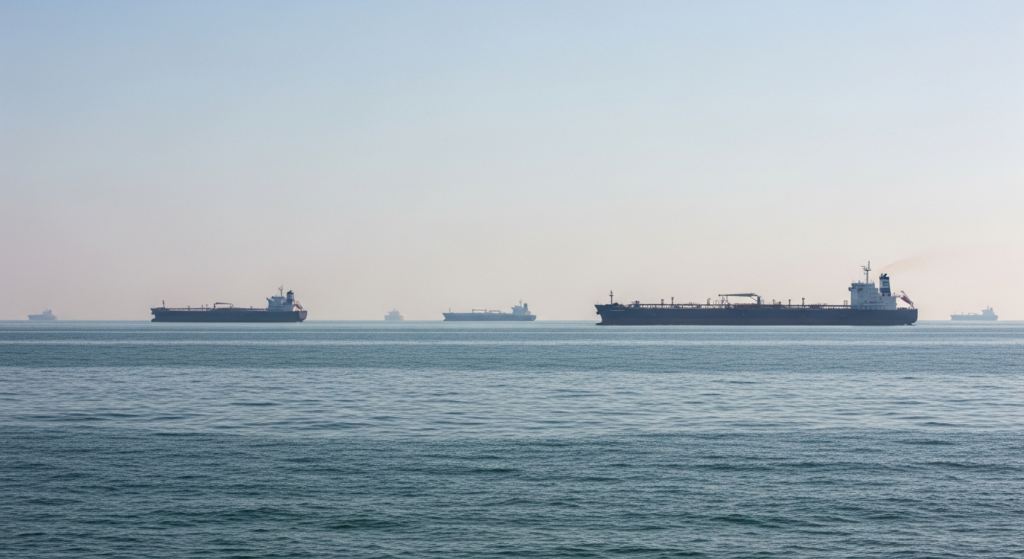
Renewed hostilities between the United States and Iran in the vicinity of Iranian ports and the Strait of Hormuz have led to an escalation of tensions, prompting immediate concerns about global shipping and energy markets as of Wednesday, July 15, 2026.
Reports indicate that the U.S. has reimposed a blockade around Iranian ports, a move that significantly heightens the security posture in one of the world’s most critical maritime chokepoints. This action follows a period of heightened friction and marks a direct re-engagement with measures designed to restrict Iranian maritime activity.
The Strait of Hormuz is a narrow waterway connecting the Persian Gulf to the open ocean, through which a substantial portion of the world’s crude oil supply passes daily. Its strategic importance means that any disruption or increased risk in the strait can have immediate and far-reaching effects on global energy prices and supply chains. The current escalation introduces significant uncertainty for commercial vessels navigating the area, raising the specter of delays and increased operational costs for international shipping.
In response to the renewed conflict and the associated risks to global crude flows, energy markets have reacted swiftly. Oil prices have climbed to a one-month high, reflecting investor anxiety over potential supply disruptions from the Middle East. This surge underscores the sensitivity of the global economy to geopolitical instability in key energy-producing and transit regions, with implications for fuel costs worldwide.
### Why it matters in Myrtle Beach
The escalation in the Strait of Hormuz and the subsequent rise in global oil prices have tangible consequences for residents and institutions in Myrtle Beach. Higher fuel costs translate directly into increased expenses for transportation, impacting everything from daily commutes for individuals to the operational budgets of major local employers. For instance, the Horry County School District faces elevated costs for fueling its bus fleet, while institutions like Grand Strand Regional Medical Center and Coastal Carolina University could see higher expenses for supply chain logistics and utilities. The City of Myrtle Beach itself may contend with increased fuel expenditures for municipal services. Furthermore, as a community heavily reliant on tourism, sustained increases in gas prices could influence travel decisions for visitors, potentially affecting the local leisure and hospitality industry, a primary economic driver for Myrtle Beach.