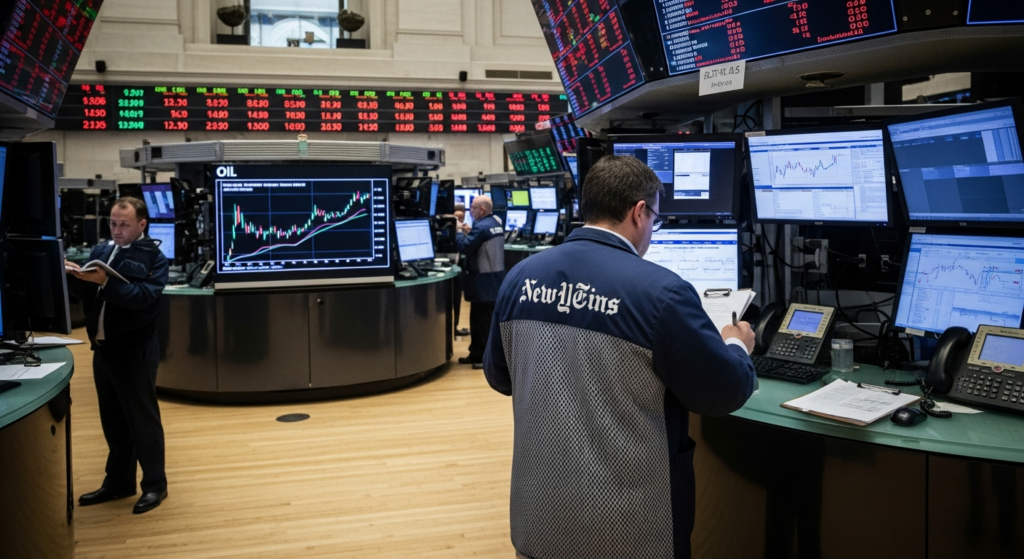
National financial markets began the second half of the year with a subdued tone, as global stock gauges registered slight declines. Investors are closely monitoring commentary from the Federal Reserve and analyzing recent economic data, while a notable drop in oil prices has also captured attention.
U.S. crude and Brent crude prices both fell, a development that could translate into lower fuel costs for consumers and businesses. This trend, if sustained, could offer some relief to sectors reliant on transportation and travel, including the significant leisure and hospitality industry in Myrtle Beach.
Market participants are focused on the Federal Reserve’s stance on monetary policy, particularly how interest rates might evolve in the coming months. Higher interest rates typically increase borrowing costs for businesses and individuals, potentially influencing investment decisions, consumer spending, and the pace of development. For a growing area like Myrtle Beach, where construction is an ongoing activity, shifts in interest rates can have a tangible impact on new projects and home affordability.
Economic data released recently is also being scrutinized for signals about the health and direction of the national economy. These broader trends often ripple down to local economies, affecting everything from employment figures to consumer confidence. While the direct daily fluctuations of global stock markets may seem distant, their underlying drivers—such as inflation concerns, central bank policy, and commodity prices—can indirectly influence the operational costs and revenue streams for businesses across Myrtle Beach.
The city’s economy, heavily centered on leisure and hospitality, retail trade, and construction, is particularly sensitive to factors that affect travel, consumer discretionary spending, and financing costs. Lower fuel prices could encourage more visitors to the Grand Strand during the busy summer season, potentially boosting local businesses. Conversely, a cautious economic outlook or higher borrowing costs could temper expansion plans for hotels, restaurants, and retail establishments, as well as for major employers such as the Horry County School District and Coastal Carolina University, which manage large budgets and infrastructure projects.