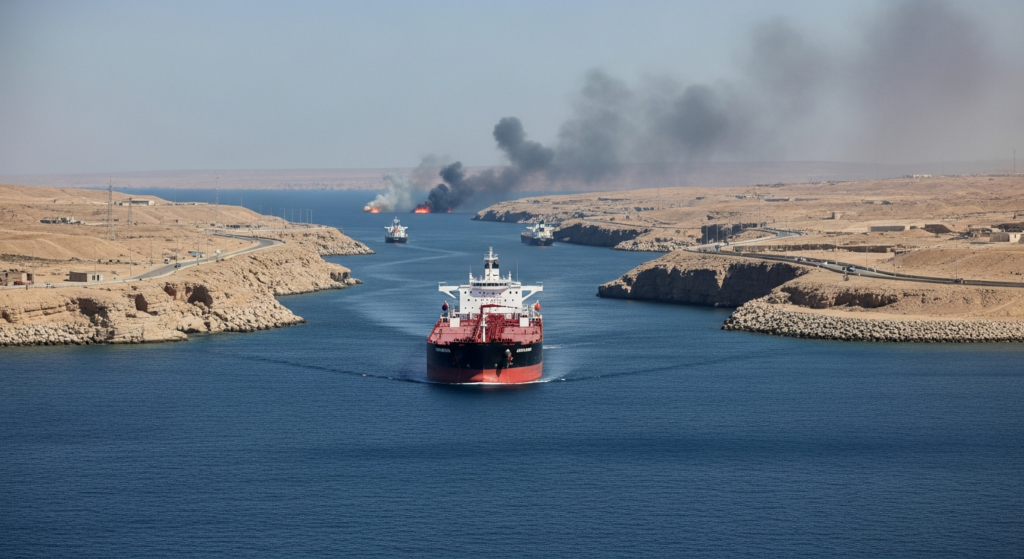
United States military forces have conducted strikes in Iran, according to non-federal international and U.S. reporting. These actions come in the wake of reported attacks on commercial vessels operating near the Strait of Hormuz, a critical global shipping lane. Concurrently, new oil-related sanctions have been imposed, further contributing to a climate of heightened shipping risk in the region.
The Strait of Hormuz, a narrow passage connecting the Persian Gulf to the open ocean, is one of the world’s most strategically important chokepoints for oil shipments. A significant portion of the world’s seaborne oil passes through this strait daily, making any disruption or increased tension in the area a potential factor in global energy markets.
International reporting indicates that the U.S. strikes are directly tied to the recent ship attacks. The broader context includes ongoing geopolitical tensions and the implementation of new sanctions targeting Iran’s oil sector. These developments collectively contribute to an environment where the stability of global oil supply chains could be tested, potentially influencing crude oil prices worldwide.
While the immediate operational impacts of these events are distant from the Grand Strand, the interconnected nature of the global economy means that shifts in international oil markets can have ripple effects. For a community like Myrtle Beach, which relies heavily on tourism and travel, changes in fuel prices are a perennial concern. Higher fuel costs, whether for gasoline or jet fuel, can influence travel decisions for visitors driving to the area or flying into Myrtle Beach International Airport.
The shipping industry, already navigating various global challenges, faces additional complexities with heightened risk in key waterways. Although Myrtle Beach is not a major commercial port for international cargo, the broader logistics network that supplies goods and services to the region could experience indirect pressure from increased shipping costs or delays in other parts of the world. The overall stability of global trade and energy markets is a factor that can subtly influence local economic conditions, from consumer prices to the operational costs for businesses in Myrtle Beach.
### Why it matters in Myrtle Beach
The ongoing international developments, including U.S. strikes and new oil sanctions, present a dynamic situation with potential, albeit indirect, implications for Myrtle Beach. The city’s economy is substantially driven by its leisure and hospitality sector, which thrives on consistent visitor traffic. Fluctuations in global oil prices, often influenced by events in critical shipping lanes like the Strait of Hormuz, can translate into higher fuel costs for travelers. This, in turn, could affect the discretionary spending of tourists or even their decision to travel to the Grand Strand. Major employers such as the Horry County School District and Grand Strand Regional Medical Center, while not directly tied to international shipping, operate within a local economy sensitive to broader economic trends. Sustained global instability or significant shifts in energy markets could create a challenging environment for local businesses and residents in Myrtle Beach, underscoring the interconnectedness of global events and local prosperity.