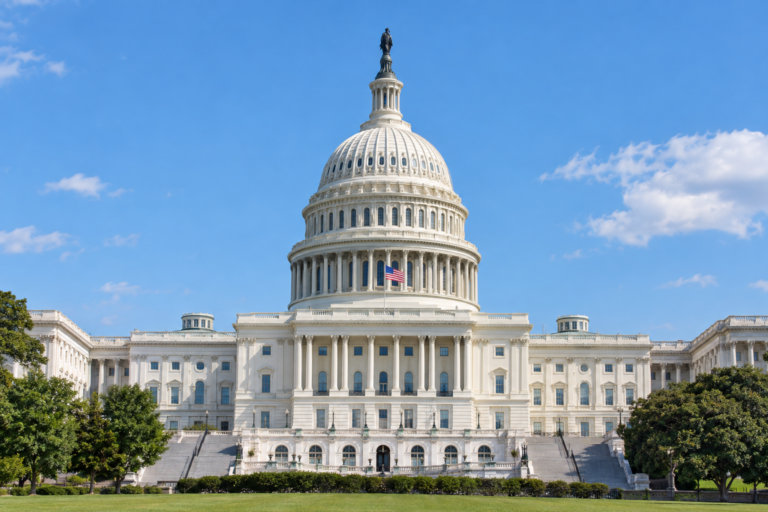
The Supreme Court on Monday issued a significant ruling that expands presidential removal power over officials in independent agencies, while simultaneously preserving a unique exception for the Federal Reserve. The decision, which involved the firing of a Federal Trade Commission (FTC) member during the Trump administration, effectively overturned a nearly century-old precedent that had limited the president’s ability to dismiss certain independent agency leaders.
The ruling stems from President Donald Trump’s 2019 decision to remove Federal Trade Commissioner Noah Phillips. The Court, in its majority opinion, held that the president possesses broad authority to remove officials from independent agencies, rejecting the argument that such officials could only be removed for cause. This decision overturns a 1935 precedent that had established a higher bar for removing officials from agencies designed to be insulated from direct presidential control.
However, the Court’s decision included a crucial distinction for the Federal Reserve. In a move that surprised some legal observers, the justices determined that the Federal Reserve’s structure and statutory framework warrant a different treatment. This means that Federal Reserve governors, including Governor Lisa Cook, remain protected from arbitrary presidential removal, maintaining the central bank’s intended independence.
The Court’s reasoning for the Federal Reserve exception centers on the specific statutory language and historical context surrounding the central bank’s creation and operation. Unlike the FTC, the Federal Reserve Act contains provisions that the Court interpreted as conferring a greater degree of insulation from presidential oversight. This distinction ensures that the Federal Reserve can continue to operate without direct political pressure from the White House, a principle considered vital for economic stability.
The implications of this ruling are far-reaching for the executive branch and the structure of federal governance. It grants future presidents greater flexibility in shaping the leadership of numerous independent agencies, potentially leading to shifts in policy and regulatory approaches. The FTC, for instance, will now operate under a leadership more directly accountable to the president’s directives.
Conversely, the preservation of the Federal Reserve’s independence is seen as a critical safeguard for the nation’s monetary policy. The ability of the Federal Reserve to set interest rates and manage the money supply without direct presidential interference is a cornerstone of its credibility and effectiveness. The Court’s decision to maintain this separation acknowledges the unique role the Federal Reserve plays in the U.S. economy.
Legal scholars and governance experts are now analyzing the precise boundaries of the Court’s decision. The extent to which this ruling might impact other independent agencies, beyond the FTC and the Federal Reserve, remains a subject of ongoing discussion. The specific language used by the Court in distinguishing the Federal Reserve could set a precedent for how other agencies’ independence is assessed in future legal challenges.
This ruling arrives at a moment of heightened focus on the balance of power between the executive branch and independent regulatory bodies. The decision will undoubtedly shape the dynamics of presidential appointments and removals for years to come, influencing the operational autonomy of various federal agencies. The Federal Reserve’s continued insulation from direct presidential removal is a key takeaway for those monitoring economic policy and financial markets.
Why it matters in Myrtle Beach
The Supreme Court’s decision on presidential removal power has indirect but notable implications for local economies and governance structures, even if no South Carolina state officials were directly involved in this specific case. The principle of agency independence is a recurring theme in public administration, and shifts in federal policy can influence how state and local governments perceive the balance of executive authority. For instance, entities like Horry County Government or the City of Myrtle Beach, which manage various public services and regulatory functions, may observe how federal interpretations of executive power evolve. While the Federal Reserve’s independence was preserved, a key aspect for national economic stability, the broader expansion of presidential removal power could lead to discussions about accountability and oversight in other governmental bodies. The ruling underscores the ongoing legal and political debates surrounding the structure of government and the distribution of power, which can inform local administrative practices and public discourse in Myrtle Beach.