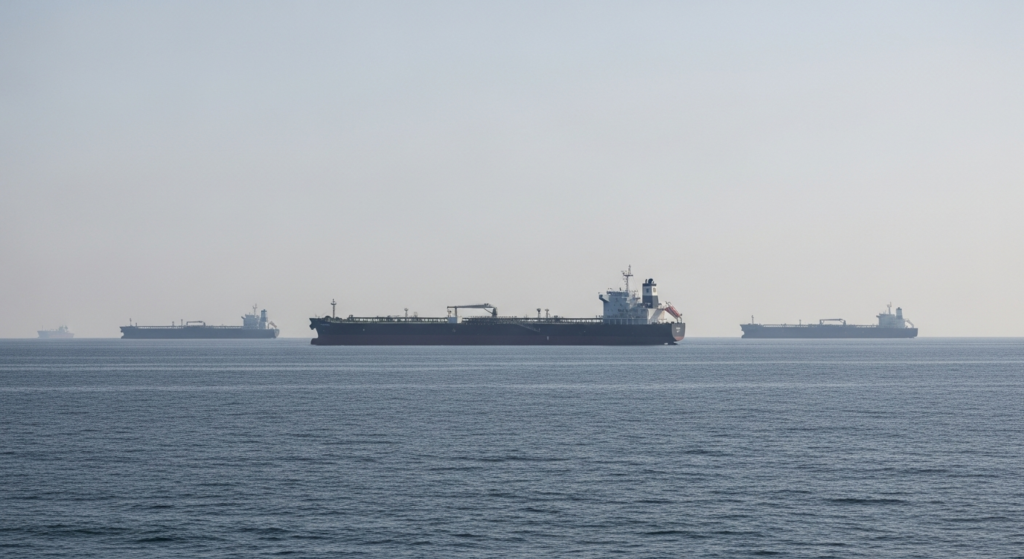
Renewed hostilities between the United States and Iran around Iranian ports and the Strait of Hormuz have prompted significant concern in global energy and shipping markets. The escalation, confirmed during the July 15 cycle, has seen the U.S. reimpose a blockade on Iran, a move with far-reaching implications for international trade and crude oil flows.
The Strait of Hormuz, a narrow waterway connecting the Persian Gulf to the open ocean, is one of the world’s most critical maritime chokepoints. An estimated one-fifth of the world’s total oil consumption, including a substantial portion of crude oil and liquefied natural gas, passes through this strait daily. Any disruption in this vital passage immediately reverberates through global energy markets, affecting supply chains and consumer costs worldwide.
The recent escalation has directly impacted oil prices, which have climbed to a one-month high. Energy-market analysts are tying this surge to the renewed U.S.-Iran tensions and the increased risk to shipping through the Strait of Hormuz. The imposition of a blockade by the U.S. adds a layer of uncertainty, raising fears of potential supply disruptions and increased transit costs for tankers navigating the region.
For the global economy, the implications of sustained higher oil prices are considerable. Businesses face increased operational costs, particularly those reliant on transportation and manufacturing. Consumers may see higher prices at the pump and for goods that depend on global shipping. The situation underscores the delicate balance of international relations and their immediate impact on everyday economic realities.
The developments in the Strait of Hormuz are being closely watched by industries across the United States, including those in Myrtle Beach. The city’s economy, heavily reliant on tourism and hospitality, is particularly sensitive to fluctuations in energy costs. Higher fuel prices can deter travelers and increase the operational expenses for local businesses, from transportation providers to hotels and restaurants. The broader economic ripple effects of such international conflicts often manifest in local communities through changes in consumer spending and business profitability.
Why it matters in Myrtle Beach
The ongoing U.S.-Iran escalation and its impact on global oil prices have direct consequences for Myrtle Beach. As a major tourism destination, the city’s economic vitality is closely tied to the cost of travel for visitors, many of whom drive from surrounding states. Increased gasoline prices could lead to reduced tourist traffic, affecting the revenue of hotels, restaurants, and attractions. Furthermore, institutions like the Horry County School District, one of the area’s largest employers, face higher operational costs for their bus fleets and facilities due to rising fuel and energy expenses. The City of Myrtle Beach itself, responsible for municipal services and infrastructure, will also contend with elevated costs for its vehicle fleet and energy consumption, potentially impacting budgets and service delivery.